

On this blue sky day with fresh snow and below zero F temperatures, I saw the snow-covered, 49-year-old beaver lodge across the lake and thought about Lily in her winter quarters, wherever that may be, and that she is less than a month away from having her ninth litter.
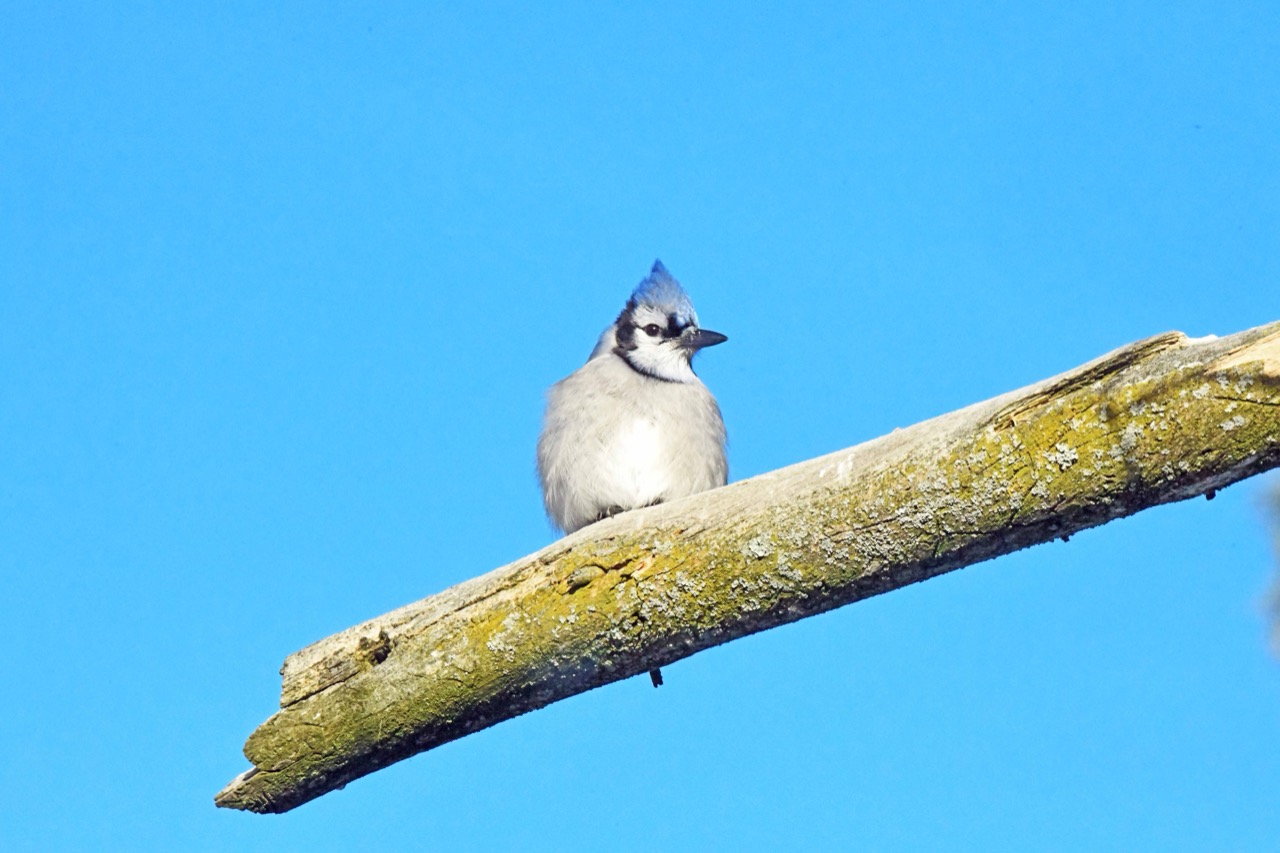 Blue Jay - Blue Sky
She may be preparing her den for the births by chewing branches into small pieces for bedding, as we saw on the den cams, but on this cold day I think it is more likely that she is preserving heat and calories by keeping her head tucked under her chest and breathing onto her nearly bare underside that can absorb some of the heat. In her head-tucked position, she has her arms and legs tucked close against her body to block cold drafts from reaching her sparsely furred underside where cubs will be nursing soon.
At her age now within a month of turning 19, she is at the peak of her reproduction and could again have a litter of four like she did in two of her last three litters but never before that.
 Chickadee
I thought about how different it is to be a bear cub versus a beaver kit. They are both about the same size, nearly a pound, but Lily’s cubs will be born with little fur and take six weeks to open their eyes as they slowly become able to walk. Beaver kits are born fully furred, with open eyes, and able to swim within hours.
Cubs and kits both stay with their mothers into their second year. Cubs are typically born in January, which is when beaver mothers are just beginning to mate. Cubs remain in utero with delayed implantation for some seven months. Beaver cubs are born much more developed only about 107 days after mating.
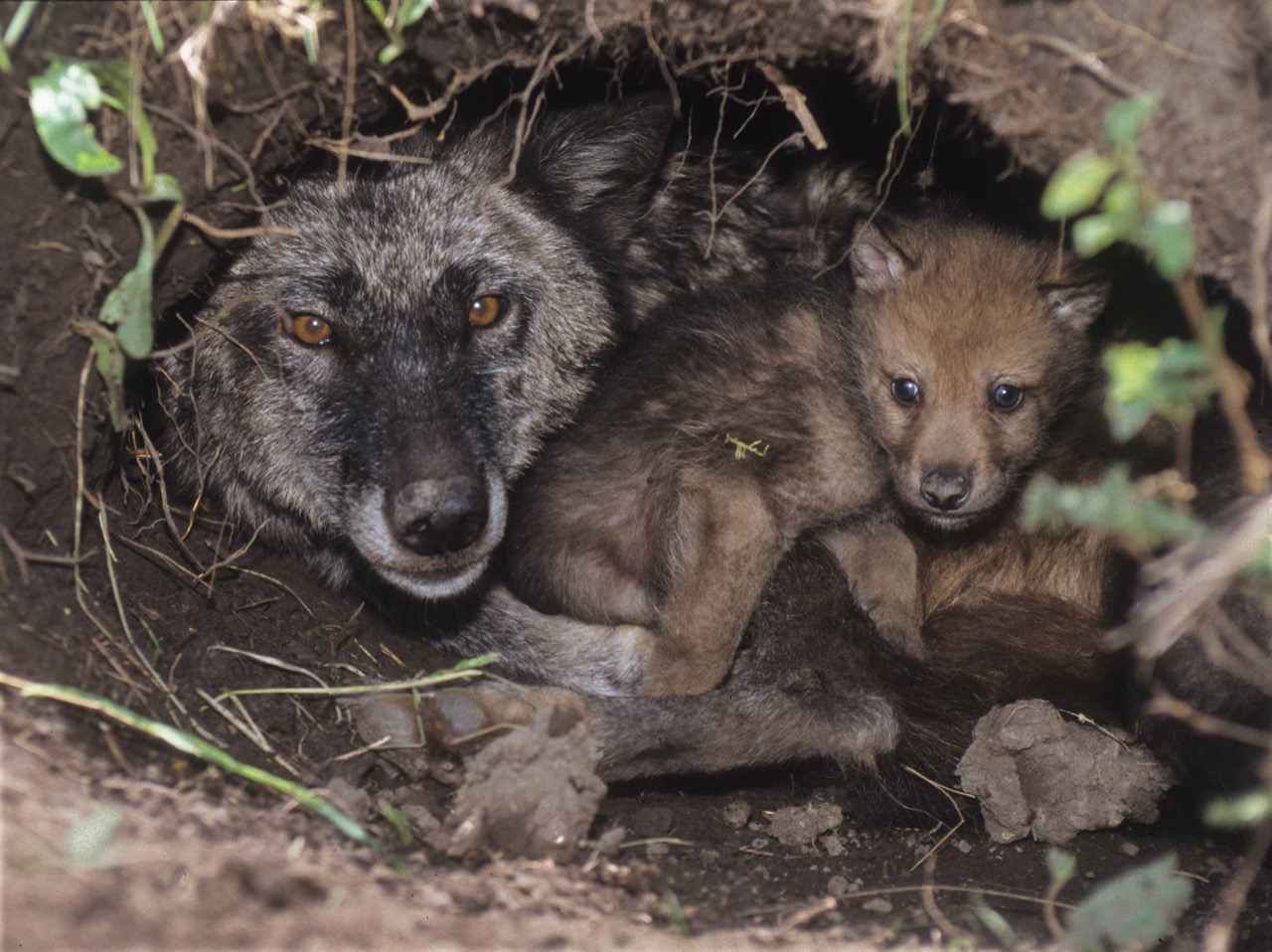 Wolf in den w pup
Both bears and beavers typically have 1 to 4 young per litter. Thinking about how bears and beavers produce young, I thought of this wolf family that I photographed back in July 1998 that is yet another story.
Thank you for all you do,
Lynn Rogers, Biologist, Wildlife Research Institute and North American Bear Center