

With the temperature well below zero and snowing, this red squirrel did its usual a few days ago. Knowing where the food was supposed to be, it dug down for its share of sunflower seeds, using its tail as an umbrella as it snowed.
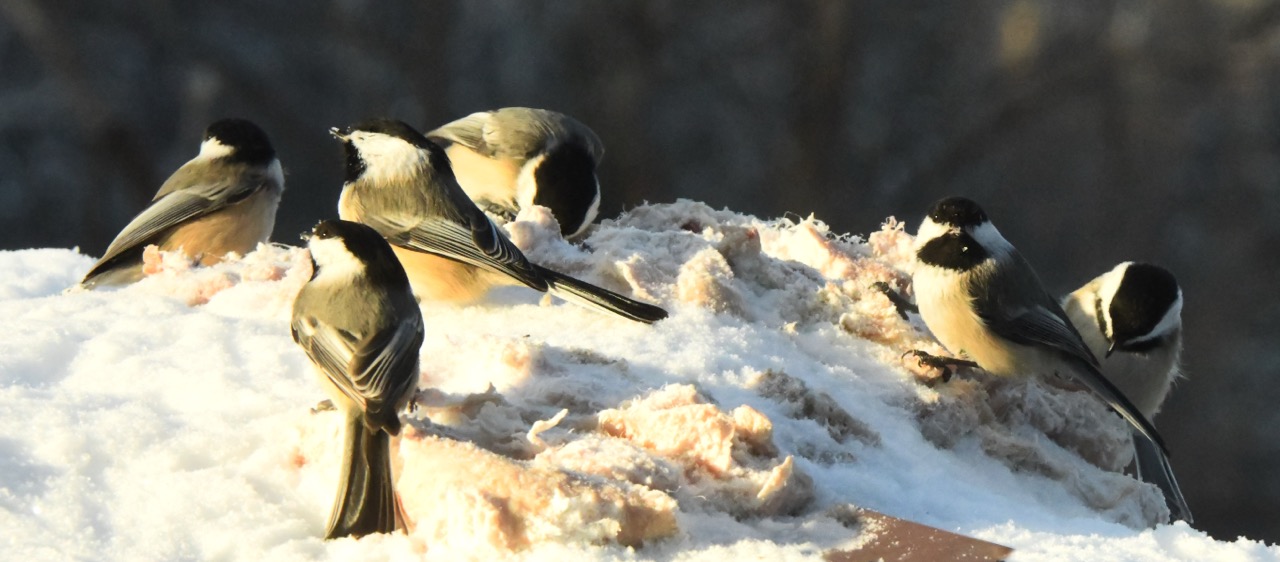 Chickadees at beef fat
On the coldest day, 22° below zero F, a couple days ago, chickadees were an hour later than usual. I don’t know exactly why. Could it be that on extra cold mornings it takes them longer to get their temperatures up to a functioning level?
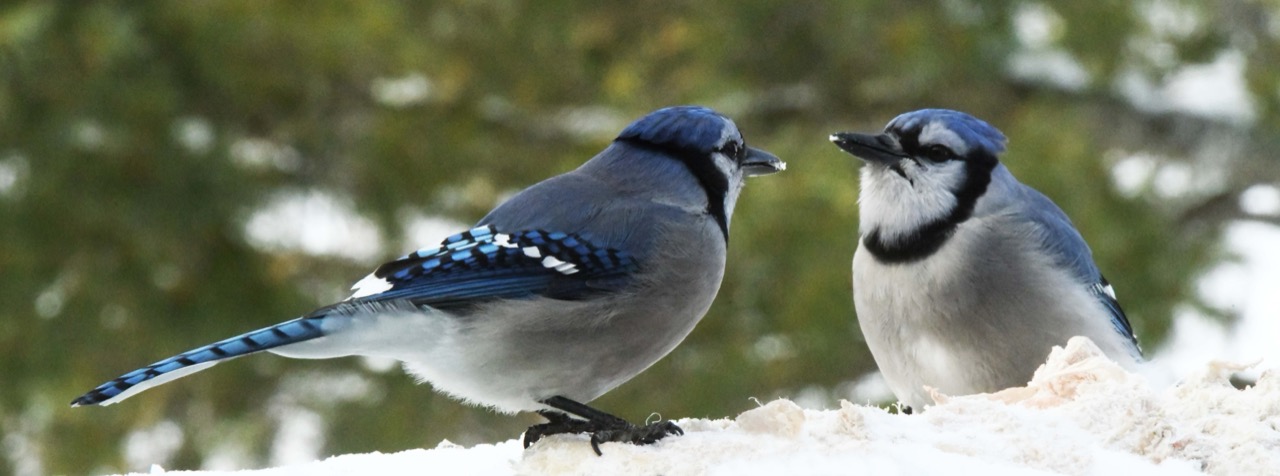 Blue Jays w/beef fat
Today, a bunch of blue jays were among the hairy and downy woodpeckers, red-breasted and white-breasted nuthatches, and black-capped chickadees going for the hard-frozen beef fat. They all got their bits of it, doing better than the eagle that swooped by without even touching the fat. Could it tell that it was too hard-frozen to eat enough of to make a difference for its big body?
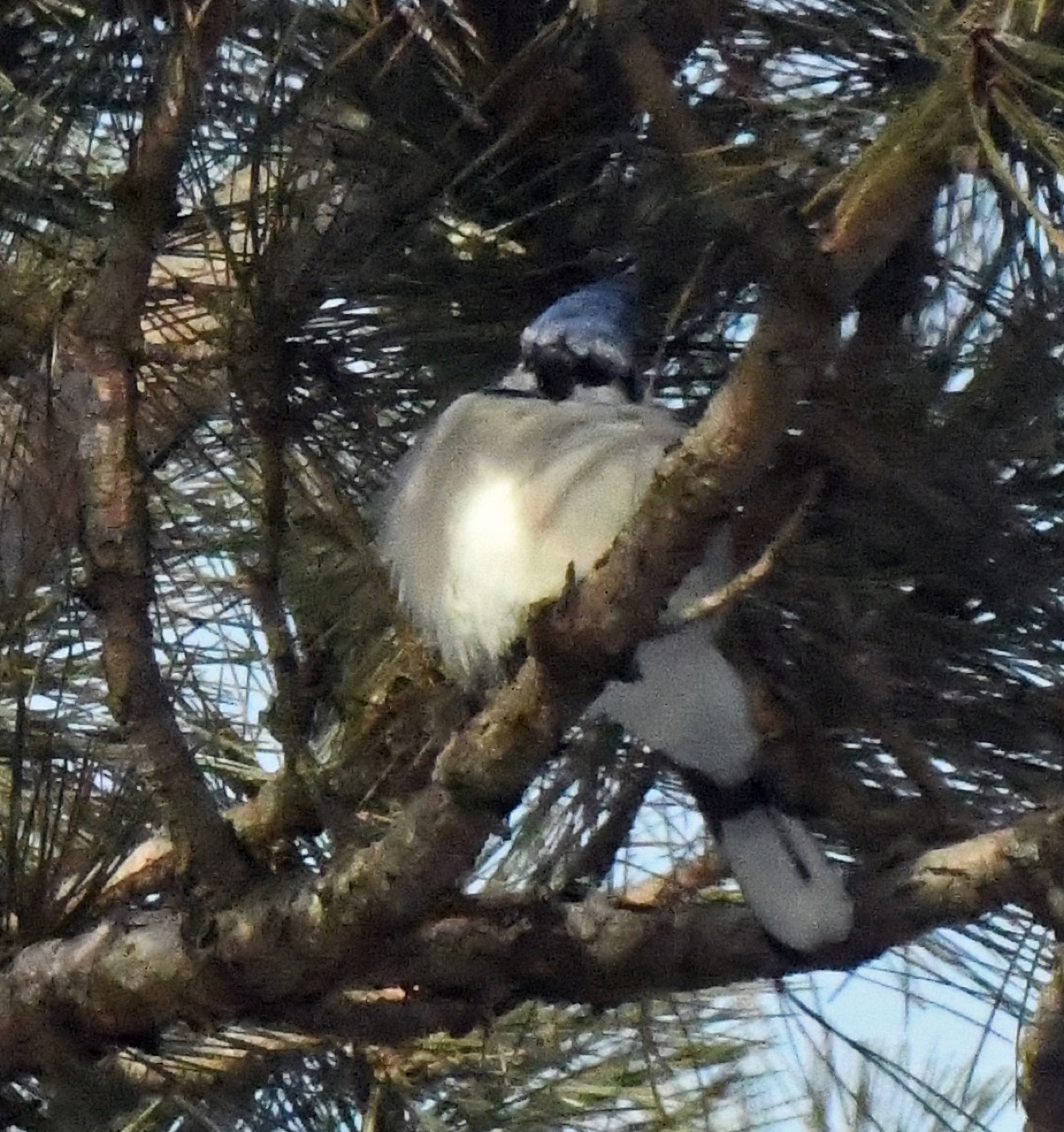 Blue Jay puffed up
As blue jays worked hard pecking at the fat, they kept their feathers tight to their bodies--even their crests were down. But then, when they had swallowed a bunch of bits of the frozen fat, they didn’t go far. They flew to sunny perches and sat quietly with their feathers puffed out for insulation. If they can warm up like that could they be thawing the fat they had swallowed to turn it into useable calories sooner rather than later? I wish I could read their minds.
As chickadees chipped away to get their share of the fat, I wondered if their temperatures were up to their normal 107°F. They are said to let their temperatures drop an amazing 20-50°F at night, sleeping with their heads buried in their back feathers, often in a hole in a tree with their flock-mates, all shivering away their fat with a need to replenish it through the day. Bigger birds like blue jays don’t lower their body temperatures nearly as much as black-capped chickadees do.
As I see chickadees and other little birds flitting around in the cold it's hard to believe they can stay warm enough to function, but they do.
Off in bear dens, bears have their heads tucked under their chests conserving heat, breathing on their sparsely furred bellies. Their back and sides and neck are covered with a good four inches of guard hairs and their winter layer of shorter, finer, denser hairs. In a month, they’ll be breathing on sparsely furred ¾-pound cubs.
Thank you for all you do, and doubly so for what you are doing to make the movie that you, we, and the film team are putting our hearts into making it effective for bears and bear/human coexistence.
Lynn Rogers, Biologist, Wildlife Research Institute and North American Bear Center