
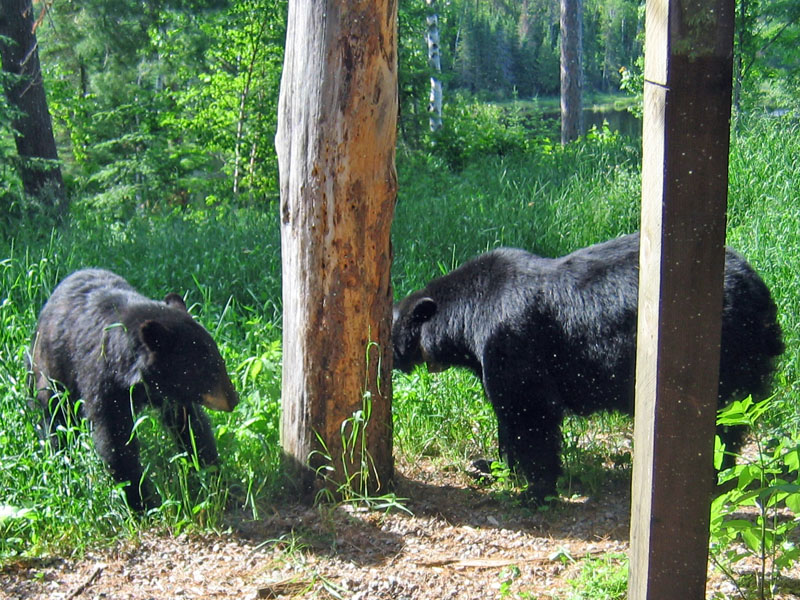
 21-year-old Midge is confronted by much-larger 7-year-old Blackheart at field station - July 1, 2004 Blasting continues today as they find more and more bedrock in the way of the foundation that needs to be poured before it gets too cold. Reports are that the bears take little notice of the blasting now. They have become 'habituated' to it. The video of their initial reactions yesterday will be ready for the update tomorrow.
Waking thoughts this morning were about Old Midge and the moment in 2009 when Sue said, “I think I’m looking into the eyes of a dying bear.” Midge had been coming to feeding stations around here every other year since late June 2004. When we first saw Midge that year, she back-rubbed trees and stomped around like she owned the place—very unusual behavior for a bear 'new' to the area. Both Shadow and Blackheart charged at Midge, but she stood up to them without consequence. Had they deferred to her because she was kin? We had no idea how far she had come from or how old she might be. She was smaller than the other mature females—thus her name. When Sue saw that Midge was dying, we started to wonder if she might be old.
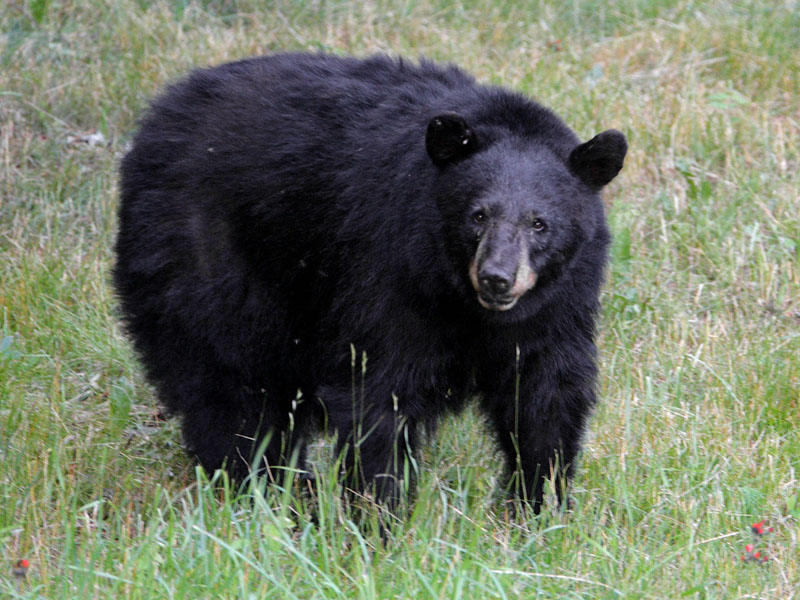 Midge - July 2008
We also wondered why she was here in August 2009 when she should have been away raising cubs as usual. She had only come previously in years when she didn’t give birth. Something was amiss. Midge had an easy manner around us and never seemed threatening, so we took the liberty of lifting a lip to look at her upper canine tooth. We could hardly believe it. The distance from her gum to the beginning of the enamel was about a half inch—the mark of a very old bear. Could she be related to Shadow’s clan? Did her easy manner originate decades earlier coming to feeding stations in the community we are studying? Had she originally had a territory here that she gradually shifted away to make room for her generations of offspring? How far away did she currently live?
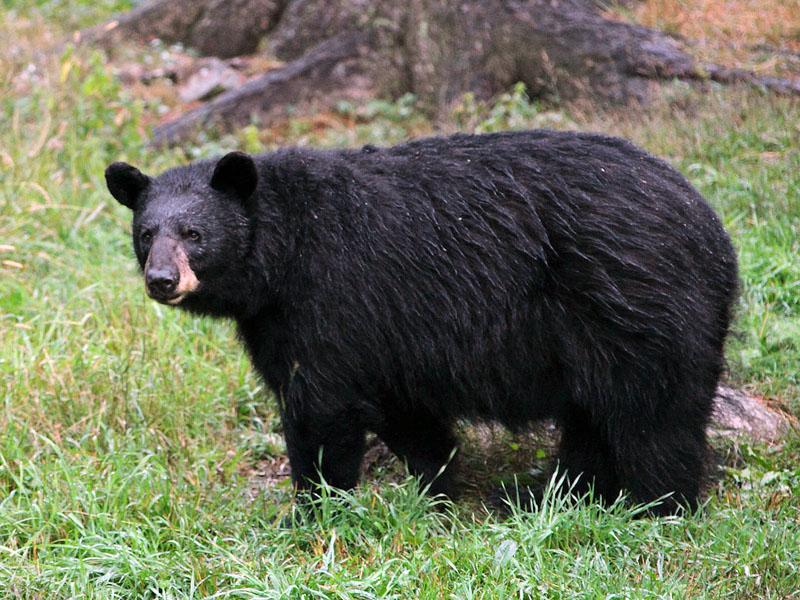 Midge - July 2008With heightened interest in everything Midge, we gave her a radio-collar. We watched her weight decline from 224 lbs in early August to 172 lbs on October 17—just before she left the area. We radio-tracked her diligently to learn her direction of travel in case she made a long move like Blackie had done some years earlier. Blackie’s signal disappeared a few degrees west of north on October 22, 2001 just as Lynn was headed for an airplane to give a lecture series in New England. When he returned, her signal was gone. Lynn got in an airplane and headed in the direction Blackie had headed. Forty-four miles into Canada, her signal appeared. But Midge went only 2.6 miles before she stalled out. Could she be denning? Her signal showed activity. Was she raking bedding? Then the signal showed no activity.
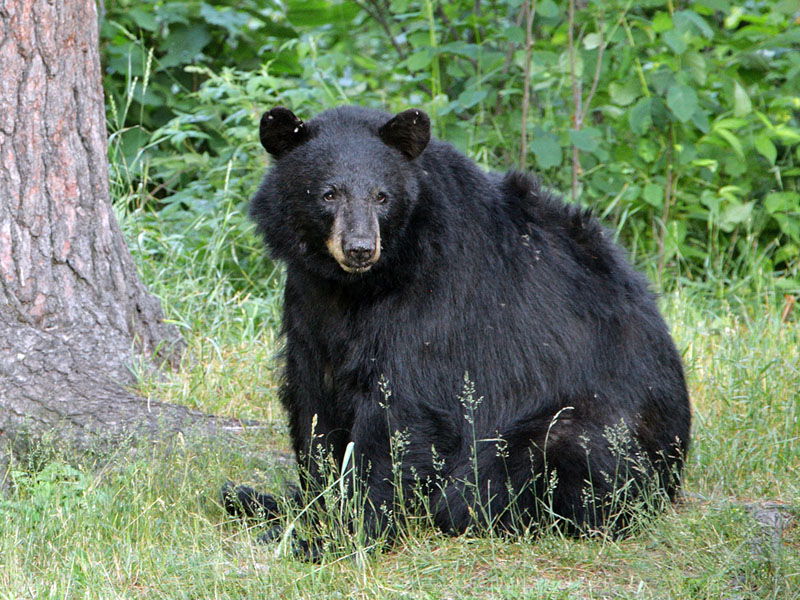 Midge - July 2008We very slowly and quietly homed in on her signal from downwind, not wanting to disturb her if she were resting near a den. The woods were damp and quiet. We had never approached Midge in the forest, and she didn’t know “It’s me bear,” so we didn’t speak. We stopped every few steps to carefully scan ahead for a dark shape. If she sensed us, she undoubtedly would have retreated. Lynn thought about a time he sneaked up on a yearling sleeping so soundly by its mother that he was able to tighten a screw on the yearling’s collar before it woke up.
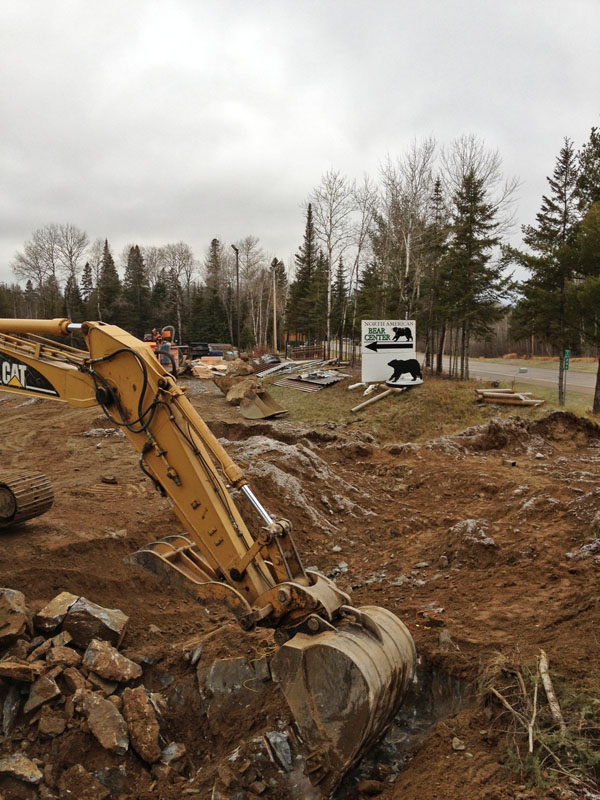 NABC addition construction - Nov 9, 2012But we needn’t have worried about Midge retreating. We finally spotted her lying dead—half submerged in an icy cold pool she might have used to fight her final fever. Back then, we were not forbidden to touch dead bears, so the race was on to get her down to the University of Minnesota’s Veterinary Diagnostic Lab before it was too late for a proper necropsy. With our slow approach to Midge, it was nearly dark by the time we got to her. We called the game warden for a verbal okay for a salvage permit and then called ahead to the lab and told the operator we were dragging one of the oldest bears in Minnesota out of the woods and were about to begin the 250-mile drive to the Lab. The operator put us in touch with a graduate student who would be waiting for us at midnight. We had not learned where Midge lived, but her death would not be in vain. We knew of NO necropsy of an OLD wild bear performed soon enough after death to be of scientific value. There is practically no information on causes of natural deaths of black bears.
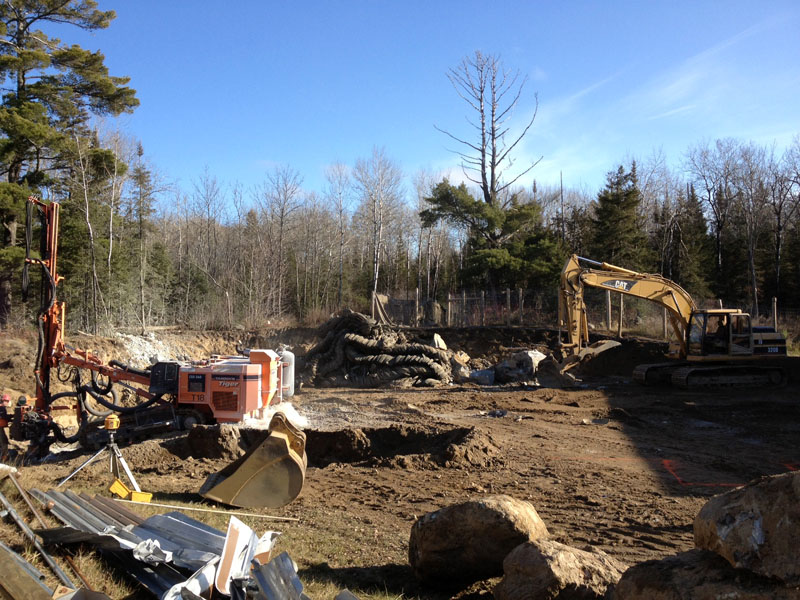 NABC addition construction site - Nov 9, 2012The results were ground-breaking. She was the first case of blastomycosis ever found in a wild black bear. The overwhelming severity of the condition was attributed to her advanced age. Despite her age, Midge had no plaque in her veins. Her uterus showed that she had lost a litter that spring. The results appear in “Fatal disseminated blastomycosis in a free-ranging American black bear (Ursus americanus)” Journal of Veterinary Diagnostic Investigation 24(6):1125-1128 (2012).
Once again, research that is kinder and gentler and based on trust revealed information that would not be possible otherwise. It allowed us to see Midge enough over the years to notice when she had a problem and be able to follow up. Although we prefer to study how bears live, we don’t want any deaths to be in vain. We wanted Midge’s death to benefit science, just as we want Hope’s death to benefit education.
Tonight marks the beginning of the Give MN campaign to build the Hope Learning Center in the new addition of the North American Bear Center. Our first mailing can be viewed at http://www.bearstudy.org/website/images/stories/Documents/GiveMN_Mailing_20121108.pdf.
Thank you for all you do.
—Lynn Rogers and Sue Mansfield, Biologists, Wildlife Research Institute and North American Bear Center