
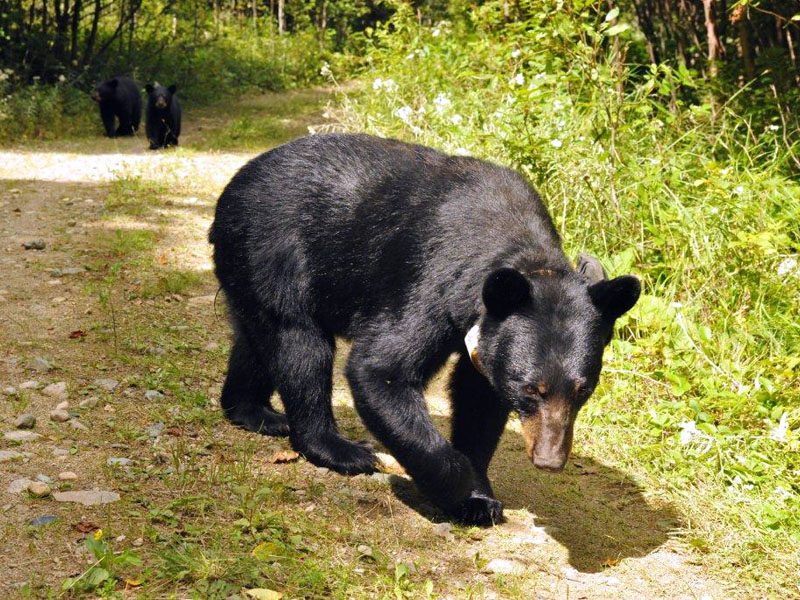
 Jewel on 4 legs! - Aug 17, 2012 We checked on Jewel’s progress. Hardly a limp. The two pictures show her putting full weight on her left hind foot. We’re always impressed how quickly bears heal and wonder if they hold a miracle potion for human healing. It’s been only 3 days since she could not put weight on the foot. Fast healing is essential to foraging on scattered foods.
 Jewel placing weight on left hind foot - Aug 17, 2012Our paper on the death of 26-year-old Midge from blastomycosis back in 2009 has been accepted for publication in the peer-reviewed Journal of Veterinary Diagnostic Investigations. This first discovery of blastomycosis in a wild bear occurred 10-20 miles from the only wild wolf ever to have been reported with this disease, making this region a focal point for blastomycosis. Although it is considered to be common in the soil, no other bear in our decades of study is known to have contracted it. Midge was the second oldest bear we studied, so the veterinarians suspected old age may have made her more susceptible.
The paper includes a wealth of other information from the very thorough necropsy. An item of special interest to us was her clean aorta—no plaque—despite fairly high cholesterol levels in winter as we mentioned in previous updates. We plan to display Midge's aorta in an exhibit at the Bear Center as we develop more exhibits.
The necropsy of Midge was possible only because we were able to quickly retrieve her body and transport it to the UMN Veterinary Diagnostic Laboratory before tissues deteriorated. We called the DNR for the needed salvage permit while retrieving the body. We did not have to wait for a Conservation Officer to arrive. Ironically, current research restrictions prohibit or at least severely hamper these kinds of studies today.
Thank you for all you do.
—Lynn Rogers and Sue Mansfield, Biologists, Wildlife Research Institute and North American Bear Center