
October 31, 2010 – 7:14 PM CDT
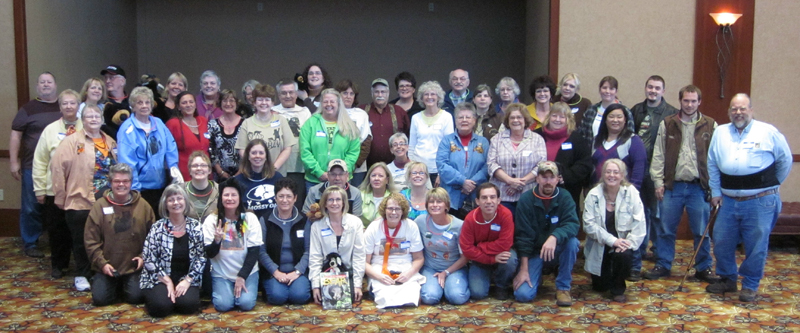
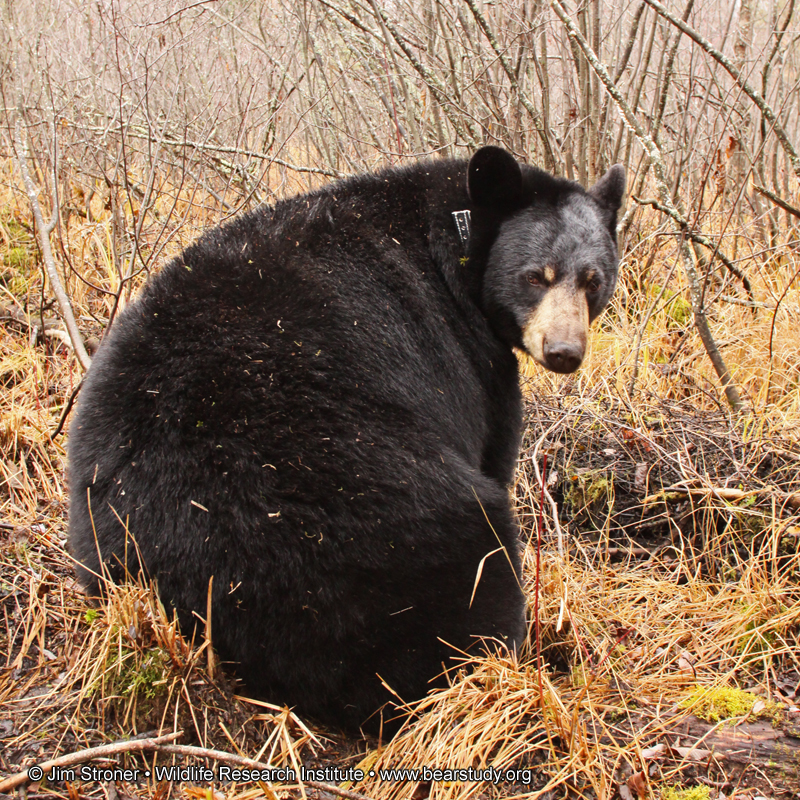 Today was the second of two back-to-back events. Yesterday was the happy gathering of about 60 Lily fans in Hinckley, MN where 49 of them managed to get in the group picture. We heard enthusiastic talk about the get-together from several who made their way farther north today for the annual ‘Free Day’ at the North American Bear Center. A crowd of over 461 saw all three bears repeatedly show up to forage in view. Their excitement about the bears, exhibits, and documentary was encouraging. Cookies and more, partly thanks to you, made it festive. Highlights were when the bears showed up—especially 700-pound Ted—and watching the stampede toward the viewing areas
  when it was announced on the speaker system. Local radio and newspapers covered the event. Most of the attendees were from the Ely area. Any mention of what you are doing to bring $20,000 for Ely’s schools was old news to this group! They already knew about that from the newspaper coverage of your efforts, and they were grateful. To vote, go to http://www.care2.com/schoolcontest/2704/054/.
Dr. David Garshelis was nice enough to take time from his busy schedule to explain in an email how he determined the 2% wounding loss in Minnesota. He wrote,
“The wounding information is from radio-collared bears. We have followed 349 collared bears to their eventual deaths, 270 of which were killed by hunters, and 5 of which were not recovered by the hunter (i.e., we found the dead bear – in only 1 case did the hunter report that he couldn’t find it, but knew it had a radio-collar). There are a few others that were wounded and survived (of course we check them all in the den each year and inspect them for injuries). Note that these data do not include bears that were killed and the radio destroyed. Since these would have been recovered by the hunter (presumably – otherwise we would have found the radio), the ‘wounding and lost’ rate is actually even a bit lower.”
A specialty of his is population dynamics, with wounding loss apparently being part of that. Dr. Garshelis not only studies black bears in Minnesota. His work as co-chair of the Bear Specialist Group for the International Bear Association involves studies of Asian species.
Thank you for all you are doing.
—Lynn Rogers and Sue Mansfield, Biologists, Wildlife Research Institute and North American Bear Center