
The purpose of our Wildlife Research Institute that began in 1971 is to replace old fear-based misconceptions with scientific facts about the ways and needs of bears—going beyond misconceptions that have long harmed these misunderstood animals and revealing their lives through close-up trust-based research that reveals aspects of their lives never before studied. To educate, we leverage our small budget to conduct scientific bear research that we disseminate to tens of millions of people each year through TV documentaries, radio programs, books, magazines, newspapers, scientific journals, museum exhibits and black bear field courses. We also disseminate information through public lectures, school lectures, websites, and as consultants for government agencies and non-government organizations.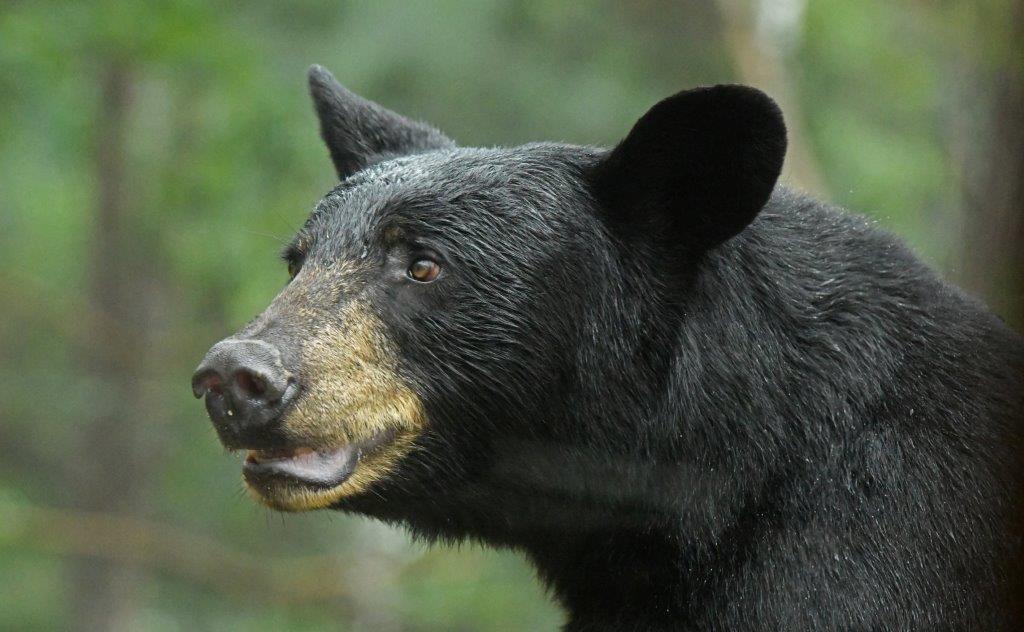 Lucy 8-19-2022
To further expand our outreach, we opened the North American Bear Center on May 5, 2007. From our research and findings, we have continued to add to the Bear Center to the extent that it was recognized by Popular Science Magazine in 2021 as the number one science center to visit in Minnesota.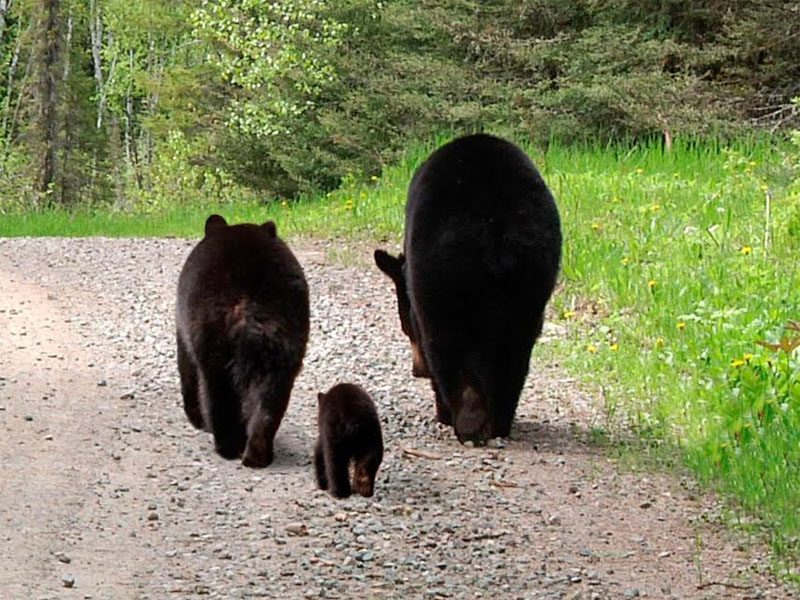 Lily, Hope and Faith 2011
Sharing our information around the world through den cams, five worldwide BBC documentaries, and a weekly BBC worldwide program that had 250 million viewers in 191 countries, we triggered the biggest worldwide shift to coexistence in history—a shift we hope to expand when our upcoming documentary is released worldwide in 2027.
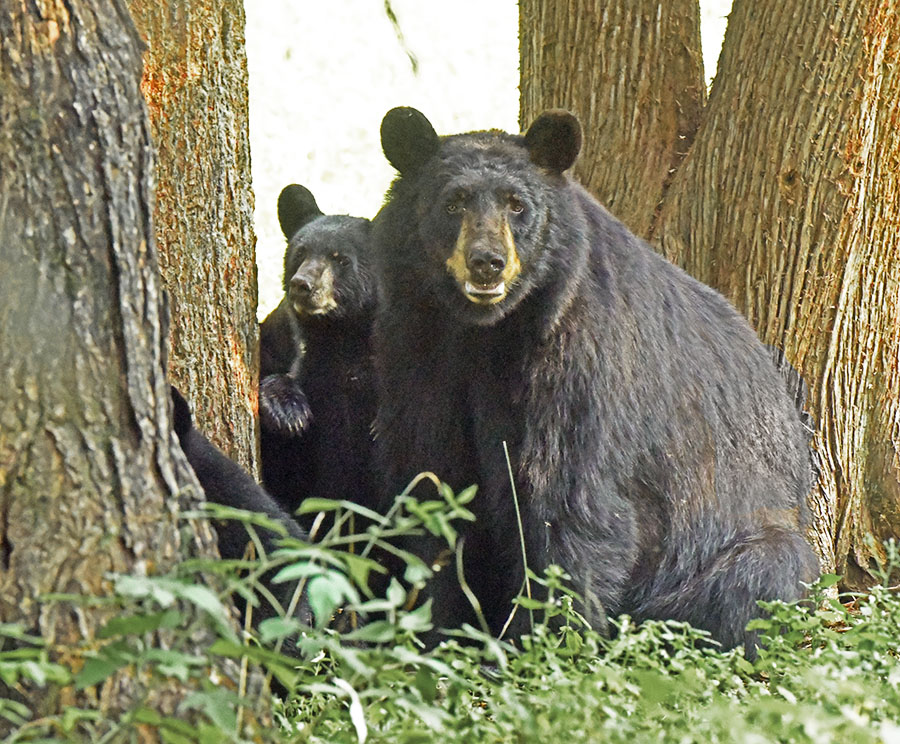 Florence and her cub - 8-12-2025
The Wildlife Research Institute is particularly in need of funding at this time because a need to save long-studied bears and other bears depleted our funds this past summer. We took on an expensive project when bears we have been studying for years faced a problem that we and the Minnesota Department of Natural Resources (DNR) had studied in 1985—the devastating effects that a major berry crop failure can have on bears. In 1985 pregnant females became so malnourished that nearly all of them lost their pregnancies with some of them becoming so malnourished it took them two and three years to recover and reproduce. 1985 was a year when mothers with cubs produced so little milk that 88% of their cubs did not survive. As examples of how far bears were travelling outside their usual ranges were three radio collared bears that had spent their lives in the roadless forests near the Canadian border but were among 90 bears killed in Duluth. In their search for nutrition, hundreds of bears were shot for seeking garbage and bird seed in residential areas. During the fall hunting season a DNR study showed that bears shot over baits was triple the usual number.
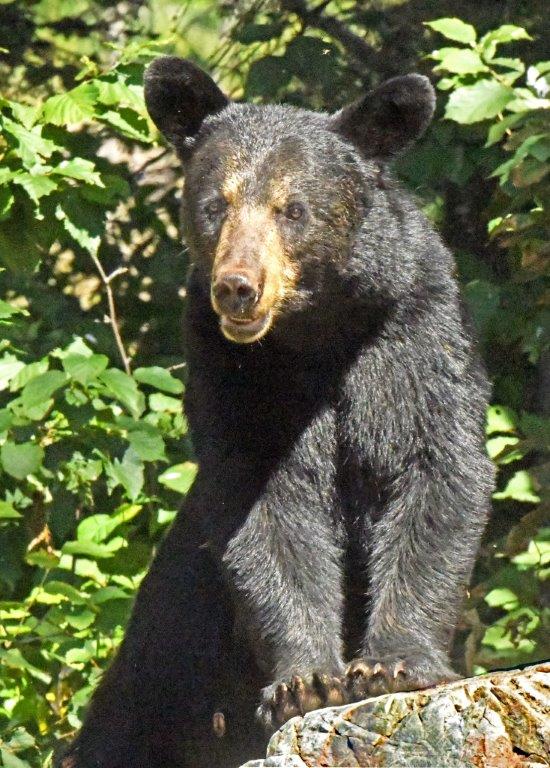 Andrea - 8-9-2023
Enlightening, though, is that bears survived and reproduced as usual in three small trouble-free areas where food was available. One of the areas was the land within 9 miles of the huge Grand Marais garbage dump. Another was in and around Eagles Nest Community that had provided diversionary food for bears, as needed, since 1958 and became known for its lack of problems and its peaceful coexistence with bears of such longevity that they included the second oldest black bear on record. The third area was the USFS Kawishiwi River campground and its surrounding residential area where I was in my second year of an 8-year (1984-1991) diversionary feeding experiment that was revealing its amazing effectiveness even when it is placed a quarter mile from the troublesome area as described in this publication (Rogers, L. L. 2011. Does diversionary feeding create nuisance bears and jeopardize public safety? Human-Wildlife Interactions. 5(2): 287-295.)
In 2026, our long-studied bears and others were facing the same problems we’d seen in 1985. In this case, an extended drought in late spring/early summer dried up the forest to such an extent that lightning strikes became forest fires that burned over a hundred square miles and dried up the developing berries that would have been the bears’ main food. Without that, hungry bears searched for nutrition far and wide, some of them having singed fur from forest fires that probably had evicted them from their home areas.
 Snowballs cub by Aatrox Burkat 7-8-2026
To avert the devastation of 1985, eight bear-loving families who lived between Eagles Nest and Ely teamed up with us. We saw familiar study bears and other bears, some with fur singed from the forest fires that were caused not only by the drought but by the shallow, sandy soil that readily loses its moisture in our area. Throughout the summer until the bears retired to their dens, we spent a fortune on diversionary food that kept them out of trouble, let pregnant females gain weight and maintain their pregnancies, let 27 mothers produce milk for 76 cubs, let us provide healthy food in the absence of berries, and let us see that all looked healthy and fit as they approached hibernation and our budget was at its lowest ever. Black bear field course participants saw more mothers with cubs than ever before, which was also true for us. Seeing bears we hadn’t seen for years, we were happy they remembered where to go when wild foods were so scarce.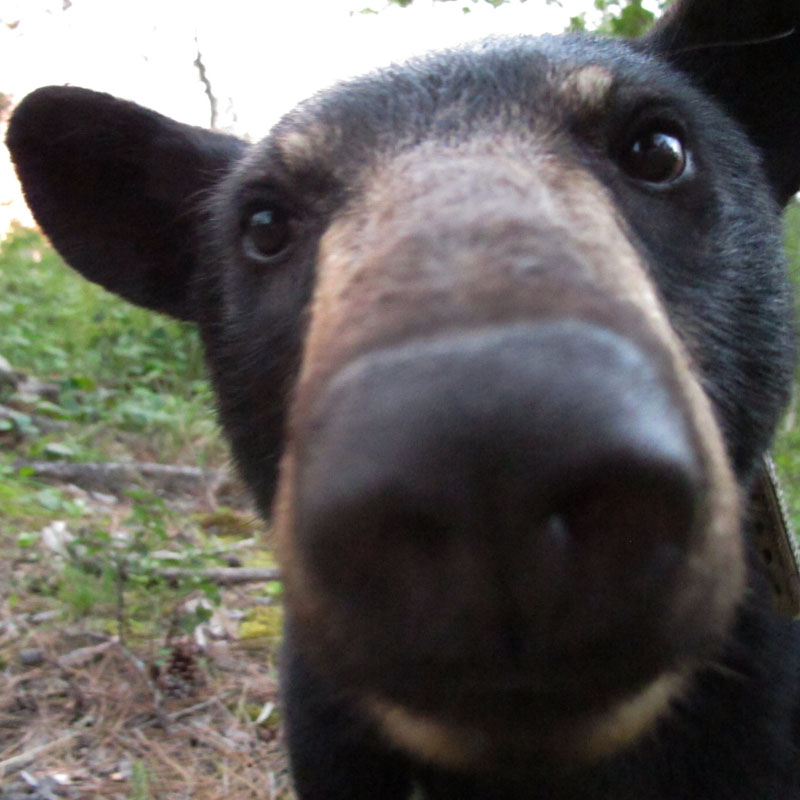 Aster and her big nose 7-18-2012
Going forward, there is much we want to do for research and education. We’re thankful that the study bears made it through the challenge, adding another year to their lives. Bears with histories let us ask questions that could not otherwise be answered. Among the bears that benefitted were 19-year-old Lily and her three cubs that were last seen safe and sound on October 17 after hunting season was over. During the hunting season, we heard shots only twice. Both were about three quarters of a mile away, making us optimistic that we didn’t lose any study bears. It was a wonderful year of doing good for bears, catching up with bears that remembered us after years of absence, and being with course participants who could hardly believe all they were seeing. 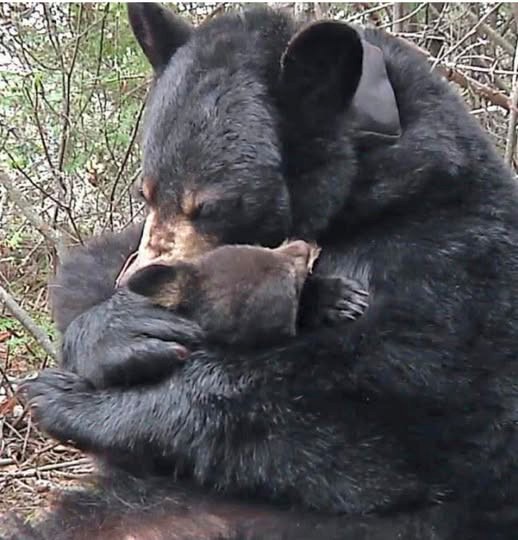 Lily and Hope May 20, 2010
To help us and the bears recover financially, we will very much appreciate any GiveMN donations you would like to give. If you are more comfortable sending a check, you can mail it to the Wildlife Research Institute, 1482 Trygg Road, Ely, MN 55731. We’re at 218-235-8592 and 218-365-4480.
Thank you for all you do,
Lynn Rogers, Biologist, Wildlife Research Institute and North American Bear Center