
A picture from my old deer study days brought back a memory of how things started. My bear study actually started on June 24, 1967. Along the way, I kept looking for kinder, gentler ways to get deeper insights into how bears live. 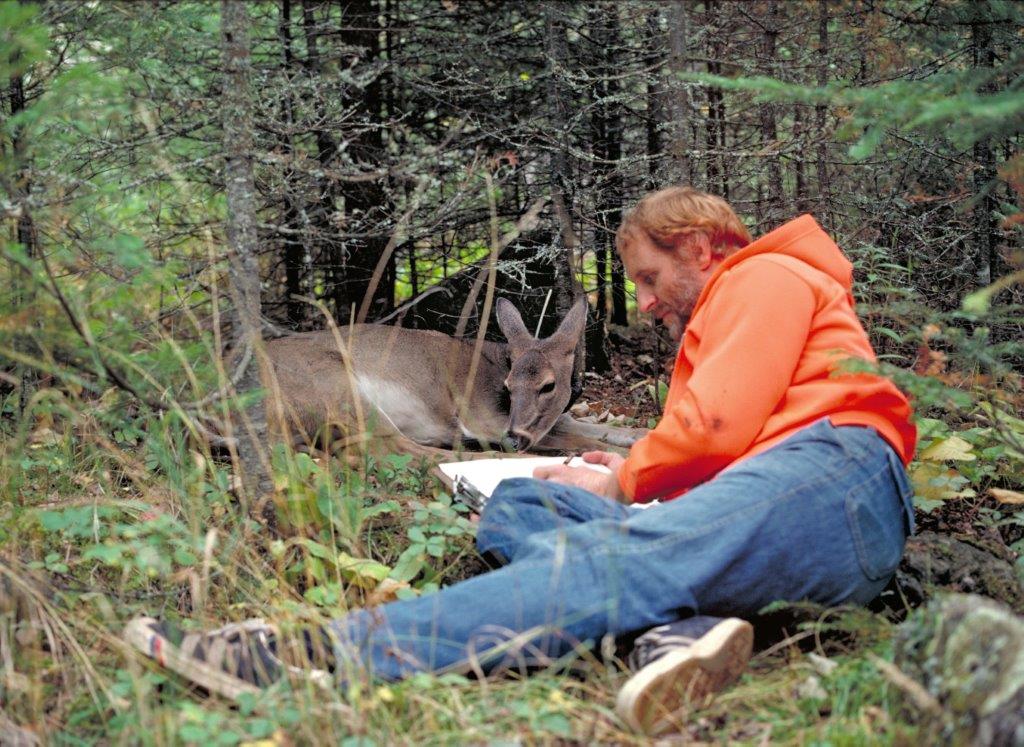 Deer resting with Lynn Rogers - 1979The U. S. Forest Service heard about that and created a research scientist job for me to do that for other animals while I continued my bear study. They asked me to do that for deer to get better information on how to manage forests to benefit this major prey of the endangered timber wolf. That was a problem. Deer had been studied forever and nobody had come up with a method for learning what they ate throughout the year. For winter, people followed deer tracks in the snow and noted the kinds of twigs that had been nibbled. But what about foods other than twigs? People had looked at stomach contents of road-killed deer, but sample sizes were small, and it was hard to identify chewed-up leaf bits. People had taken tame deer out on leashes to note what they ate, but did it make a difference that their stomachs were already full of captive foods? And would the people controlling the leashes wade into swamps and select habitats like wild deer would?
I liked the idea of being totally accepted by deer that ranged completely free and were able to select their habitats and reveal what they ate year-round. There was very little data on summer food habits. It was fun and revealing. My assistants and I bottle-fed young fawns and let them run free. They came running to the sound of clanking bottles. We stimulated their behinds to start them urinating and defecating, and we inserted rectal thermometers to get them used to that. If a deer was resting when one of us began a 24-hour data recording session, the deer just kept resting, sleeping, or chewing its cud. If the deer was foraging, it paused long enough to lick an arm in greeting and go back to foraging. We all became experts at identifying half-grown plants in the instant before they disappeared down a deer’s throat. We saw how they spent their time day and night in all seasons. In winter, we brought sleeping bags in our backpacks. After a year of doing that, I knew far more about deer than I had learned about bears in a decade of putting radio location dots on maps and measuring tranquilized bears. As soon as I learned enough about black bear lunges and bluff-charges to know I was safe, we began accompanying bears to finally learn the details of their lives. You know the rest of the story. The picture is from 1979.
Thank you for all you do.
Lynn Rogers, Biologist, Wildlife Research Institute and North American Bear Center