
This video showed so much more than I would have expected from a moray, I had to put it in. A man from Brazil sent it to me because it reminded him of the Wild Animal Reunions that showed nice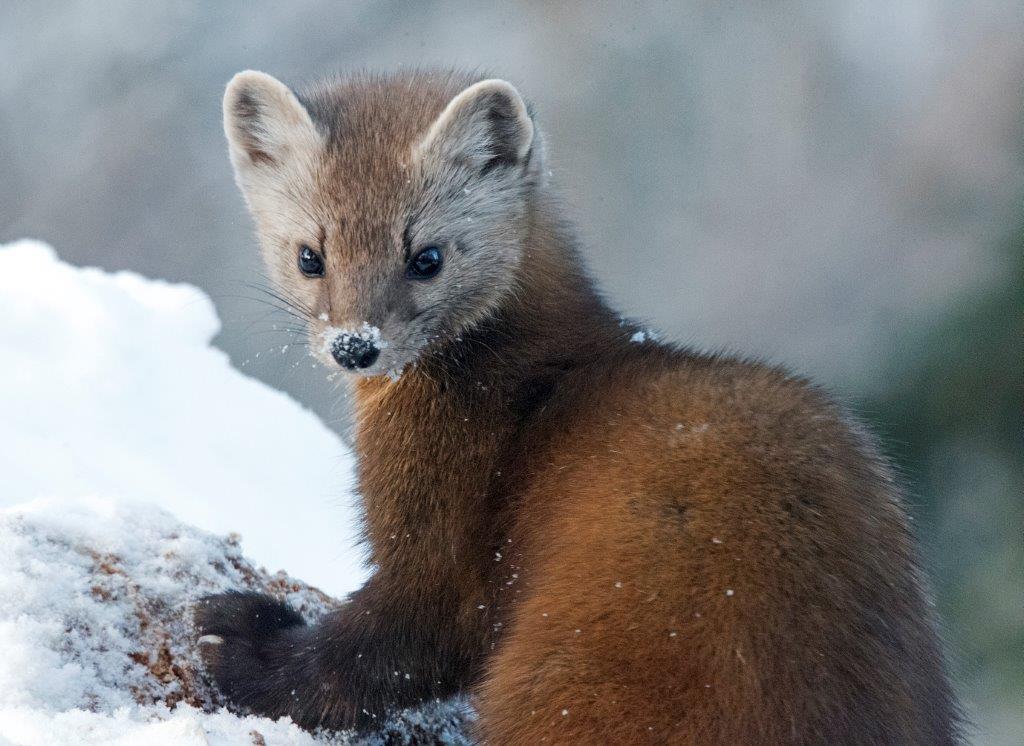 Pine marten Ursula a few months ago. I couldn’t believe a moray would be so cognizant and comfortable with a person. It seemed to enjoy the stroking the same as a bear or dog enjoys a firm stroke down the spine. Animal intelligence and feelings continue to surprise me—especially from a moray. It shows how little we (I) know. https://www.youtube.com/watch?v=npP8maVti7o&t=4s
Then an email about the bears being poisoned by yew popped up from bear biologist Dr. Tom Smith of Brigham Young University. Tom said, “Hmmm… maybe, but I forage on American Yew all the time. Yes, there are 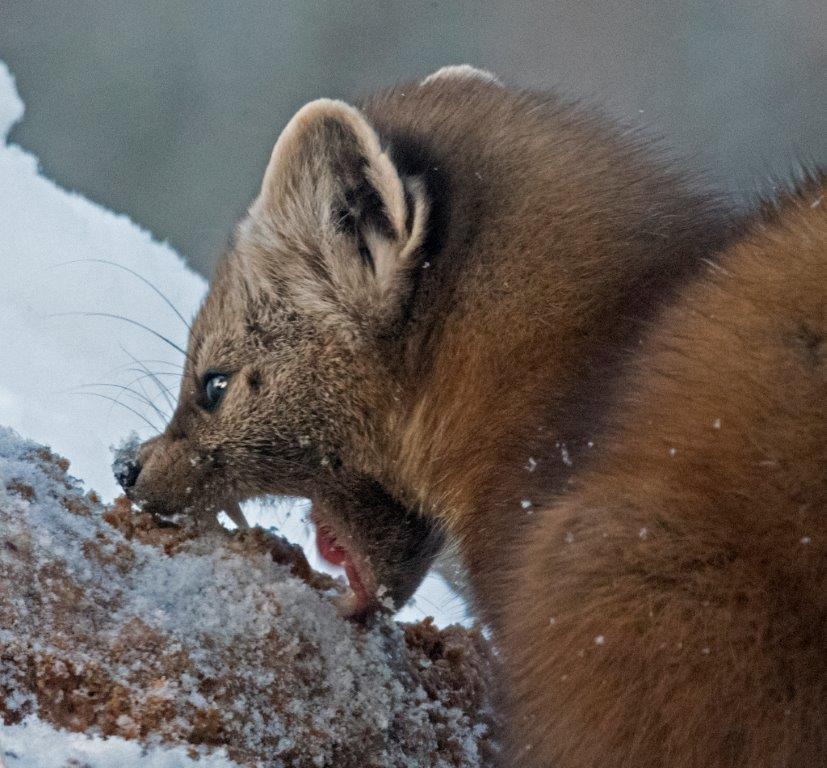 Pine marten biting frozen date mashtoxins in the leaves and within the very hard, stony pit of the berry, but the aril is very sweet and delicious. For years we’ve dined on cheesecake topped with yew berries so I’m a bit skeptical of Pennsylvania’s assessment. Yes, they may have eaten leaves but they are very, very bitter… (yea, I’ve tasted one then spit it out) and yes, they could have crunched seeds but they’re like macadamia nuts and have to be opened with a hammer… the seeds’ condition would be interesting to know… just handling them, however, will not make you sick. Or I (and Euell Gibbons) would be long dead… as would many others who forage on this wonderful shrub!”
And another bear expert said, “And I would imagine if that were what killed this entire family of bears then we should have seen many many more deaths like this in Bear Country all over North America.”
The marten stopped by in good light, so I couldn’t help but grab the camera and click it a couple times through the window. It was 11°F, so she had a hard time biting into the frozen date mash.
Looking forward to eating out with Donna tonight—nothing late.
Thank you for all you do. I’m hoping for a great new year for the bears and all of us who care about them.
Lynn Rogers, Biologist, Wildlife Research Institute and North American Bear Center