
With temperatures below zero all day, warm-blooded birds and mammals were scrambling for fuel to burn against the cold. At the Bear Center, 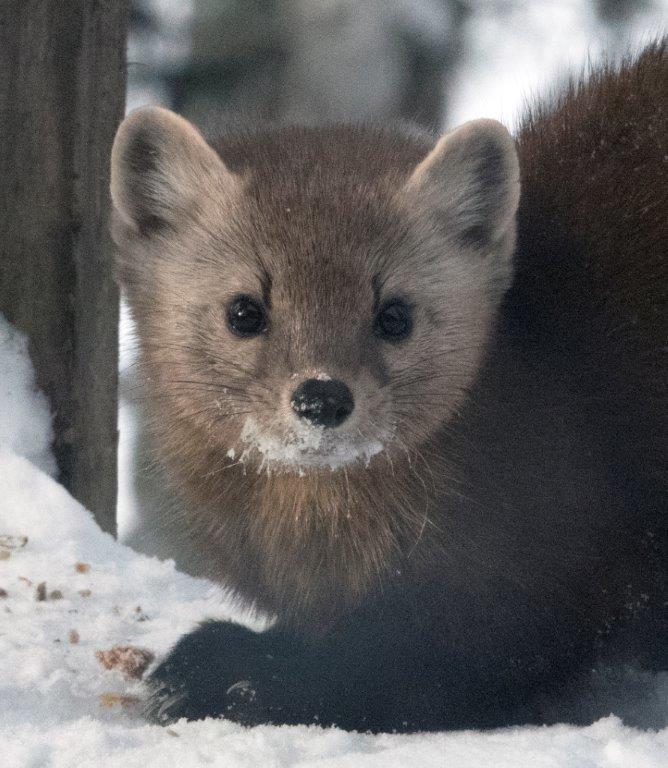 Pine martenblack-capped chickadees came steadily for high-fat sunflower seeds, prompting cute captions from a Lily Fan.
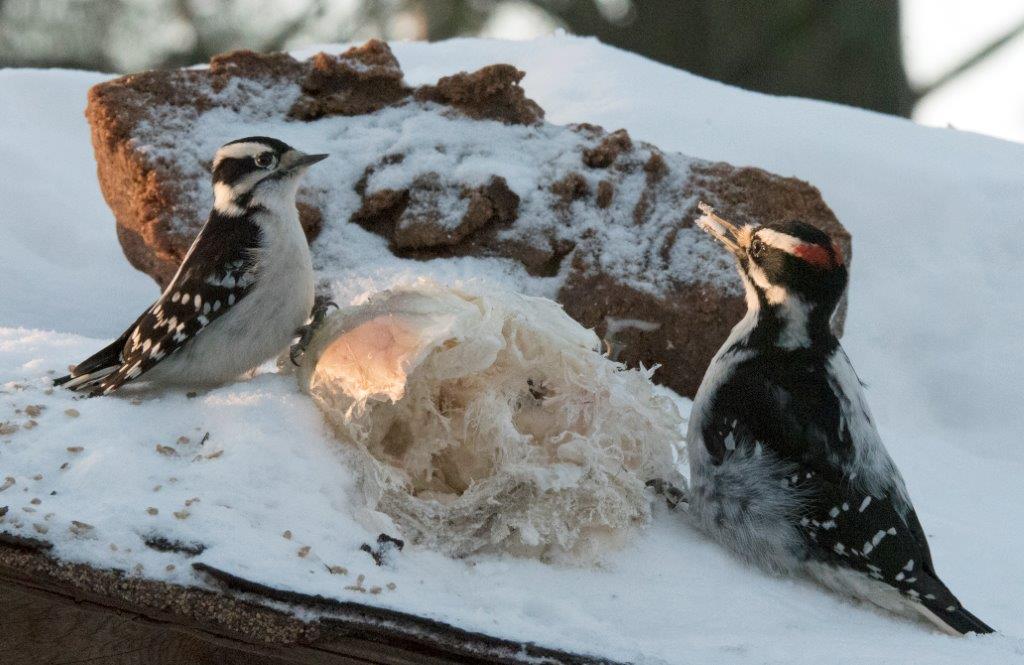
Out the window at the WRI a little downy woodpecker did the unusual, challenging the bigger hairy woodpecker for access to suet. Seeing them together, it is easy to spot the stubbier beak of the downy on the left compared with the hairy’s beak twice as big on the right. This male hairy is the individual that refuses to be bullied by red squirrels. He spreads his wings and stands his ground against them. But with this little female downy, he was the one that left. He’d been there awhile and might have been full.
 Downy and Hairy woodpeckerBreathing steam in the cold and with lips covered by snow, the female pine marten has a small piece of date mash by her foot. Next, she grabbed a big piece that Peggy had chopped off the big block for her and ran far off into the woods.
Otherwise it was a quiet day of writing, feeling glad to be in where it’s warm.
Yesterday, a nice Lily Fan called to say we could have her nice Nikon camera and lens to photograph the Bear Center bears for calendars, updates, post cards, etc. Thank you! She said she was interested in the Black Bear Field Courses but was afraid it would be too much walking for her bad back. 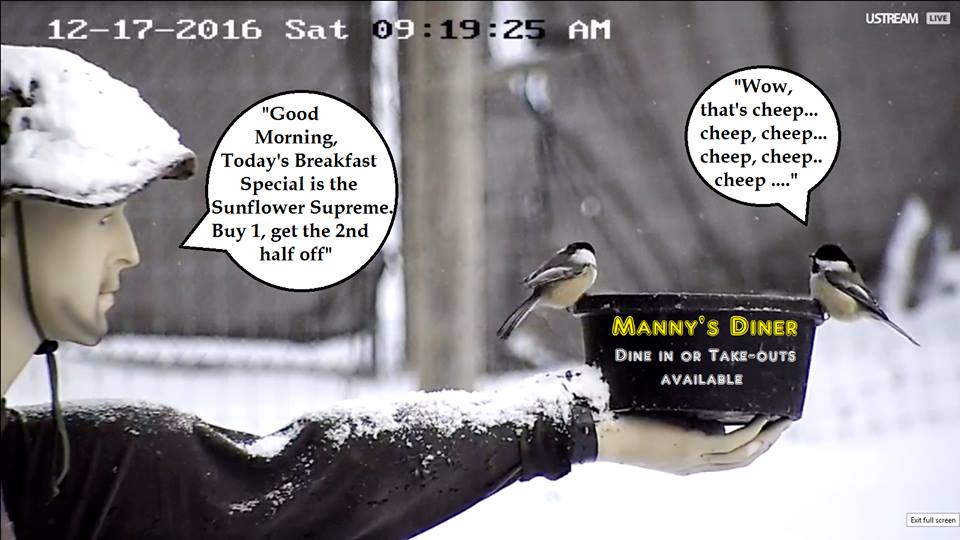 Manny and chickadeesI told her there isn’t much of that now that we don’t have radio-collared bears to track down in the woods. The long walks were fun; but now, instead of so much walking, we meet more bears than ever right here at the WRI and at other feeding sites in the community, and participants leave knowing more about bear behavior than ever before. She is a 78-year-old photographer and will likely get some nice cub pictures, considering the many cubs due this year. She will also enjoy the pontoon ride to see and photograph wildlife on and around the lake where a high point is seeing Lily’s den where Hope was born just 5 feet from the shoreline. I’m looking forward to the fun and excitement that make some of my most enjoyable times of the year.
Thank you for all you do.
Lynn Rogers, Biologist, Wildlife Research Institute and North American Bear Center