
Here at the Wildlife Research Institute, the date mash is not as popular with the deer now that we have corn in the next bin, 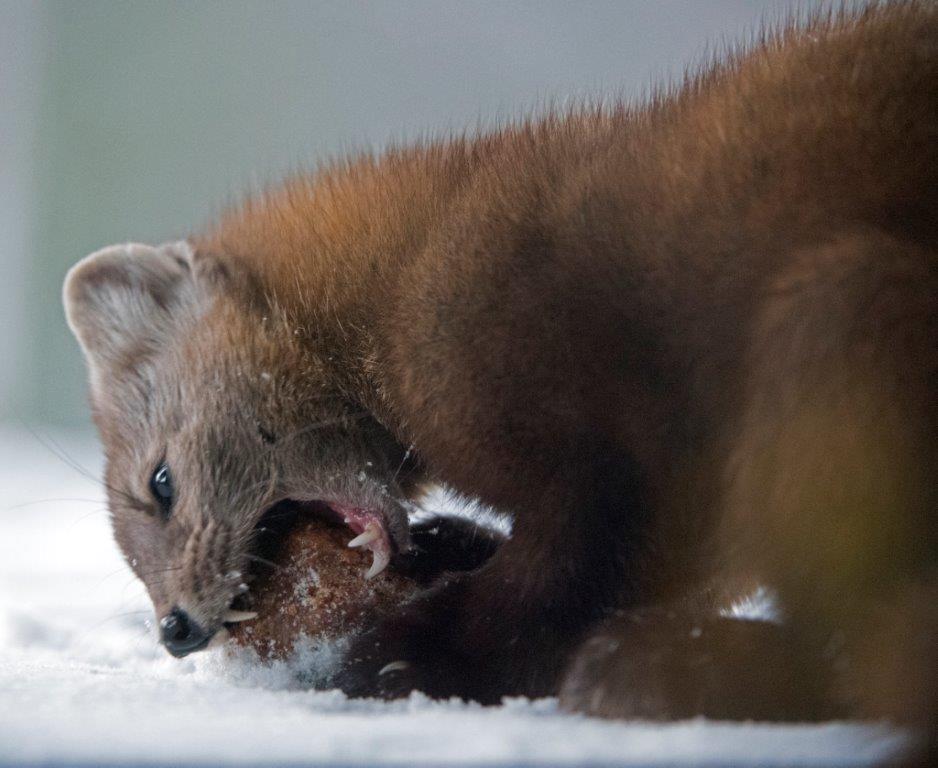 Pine marten with date mashbut the female pine marten still comes for it. With temperatures below zero F all day, the date mash is frozen and hard to bite. Peggy chopped it up, and the photo shows the marten using its back teeth to bite bits off one of the pieces.
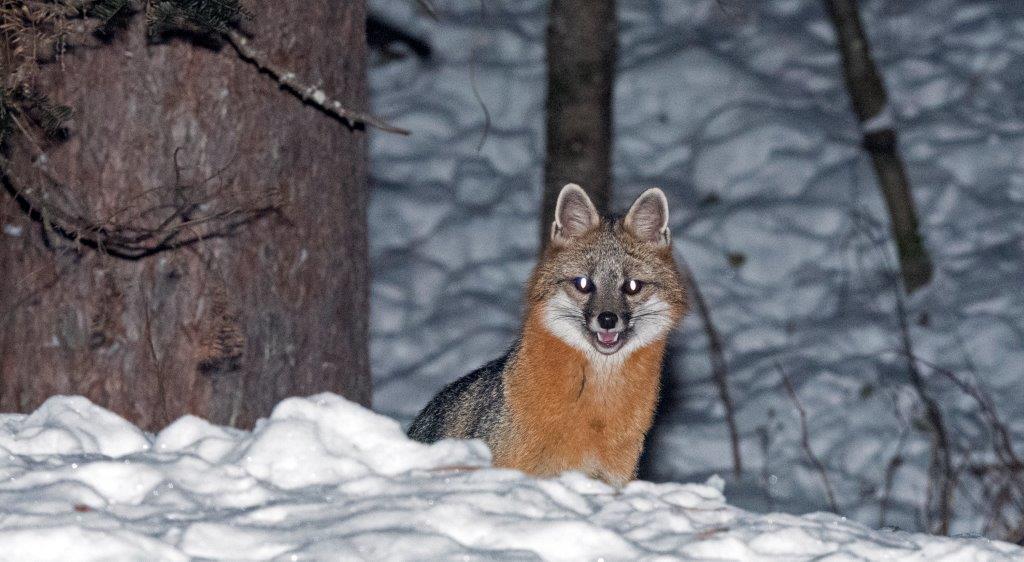 Gray foxHere in this nature loving community, a couple friends asked Donna, Peggy, and me to come over for supper and see up to nine gray foxes and a couple dozen deer that gather in their yard each evening. The same couple augments our Black Bear Field Courses in summer by having the groups over to meet favorite bears like Lily, Jewel, Faith, Shadow, Ellie, Sophie, and others. These are bears we generally don’t see at the WRI. In winter, they put out corn for deer and chicken and dog food for the foxes and a pine marten. The gray foxes scatter when the lone red fox shows up. To get chicken, the couple finds bargains,
 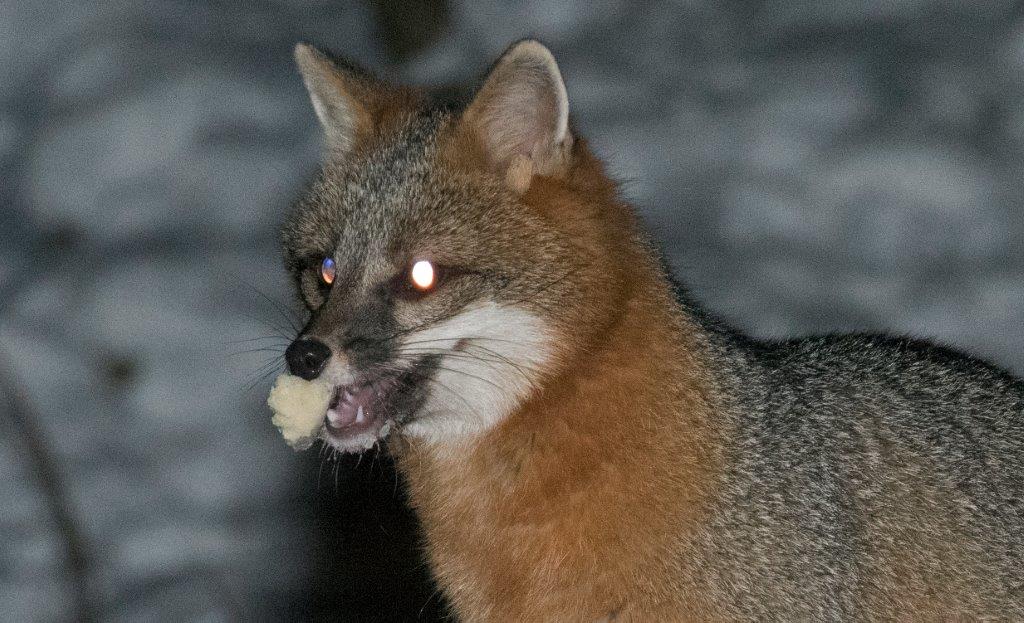 Gray fox eating chickenlike 39 cents a pound at large chain stores, and loads up their cart.
 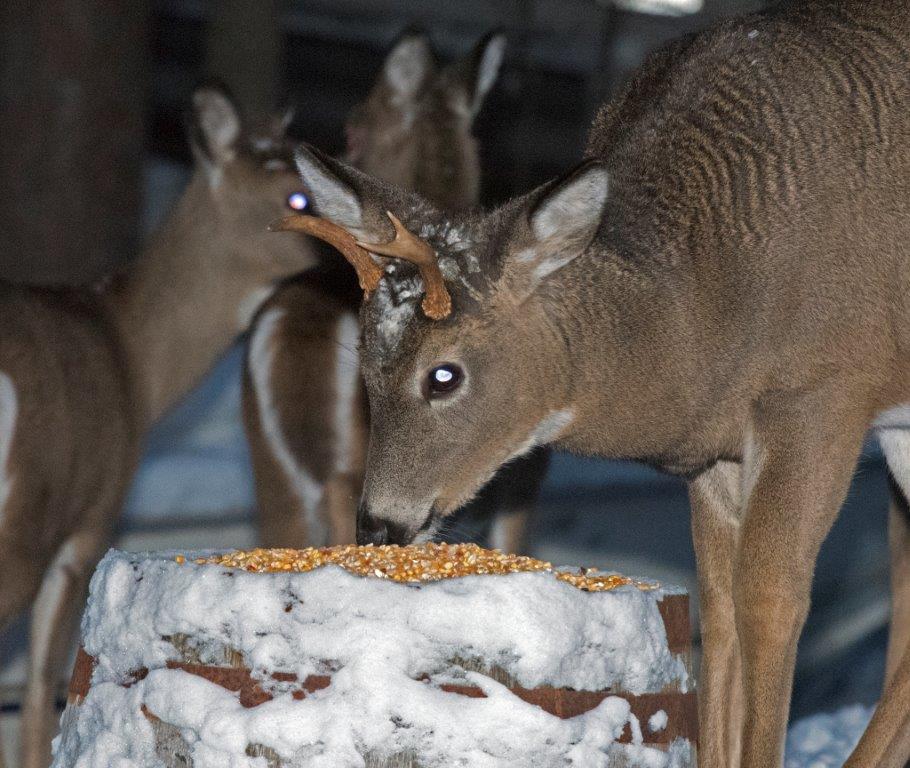 Yearling buckIt’s no wonder we don’t see as many foxes here at the WRI, we didn’t know the power of chicken. With all the corn they put out they get many more deer than we do. One of them is the 3-point yearling we had never seen before when it was calmly looking in our window recently. It’s pictured at their house this evening. When a flying squirrel visited their deck for sunflower seeds this evening, they told a story of a Lily Fan moving very slowly and being very patient for a half hour or so a couple years ago until she was able to gently stroke the back of one. Northern flying squirrels tend to be fairly tame.
These friends knew June from the time she was a cub. June grew up playing with their grandchildren. That’s what made it possible for us to easily put a radio-collar on June from the first time we saw her as a yearling. 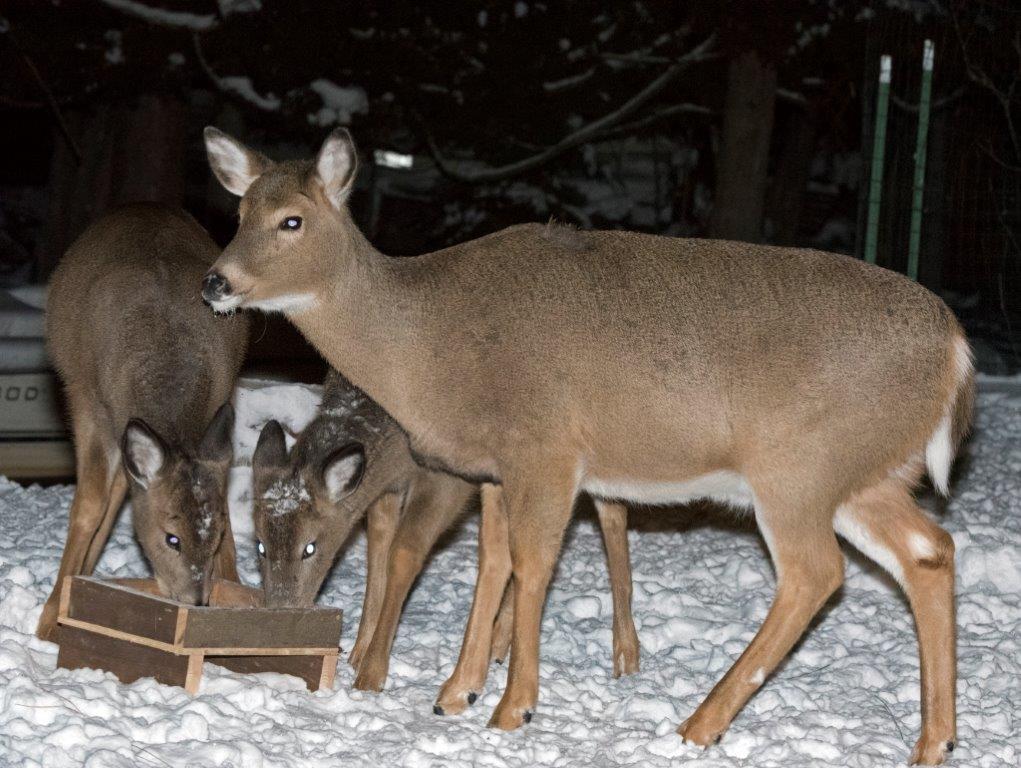 Doe and fawnsThat’s what made it possible for us to walk with her the first time we tried when June was a 3-year-old. June became the super research bear she was for the next 9 years through 2013. This couple loved June at least as much as we did. They showed us the memorial marker they have for her.
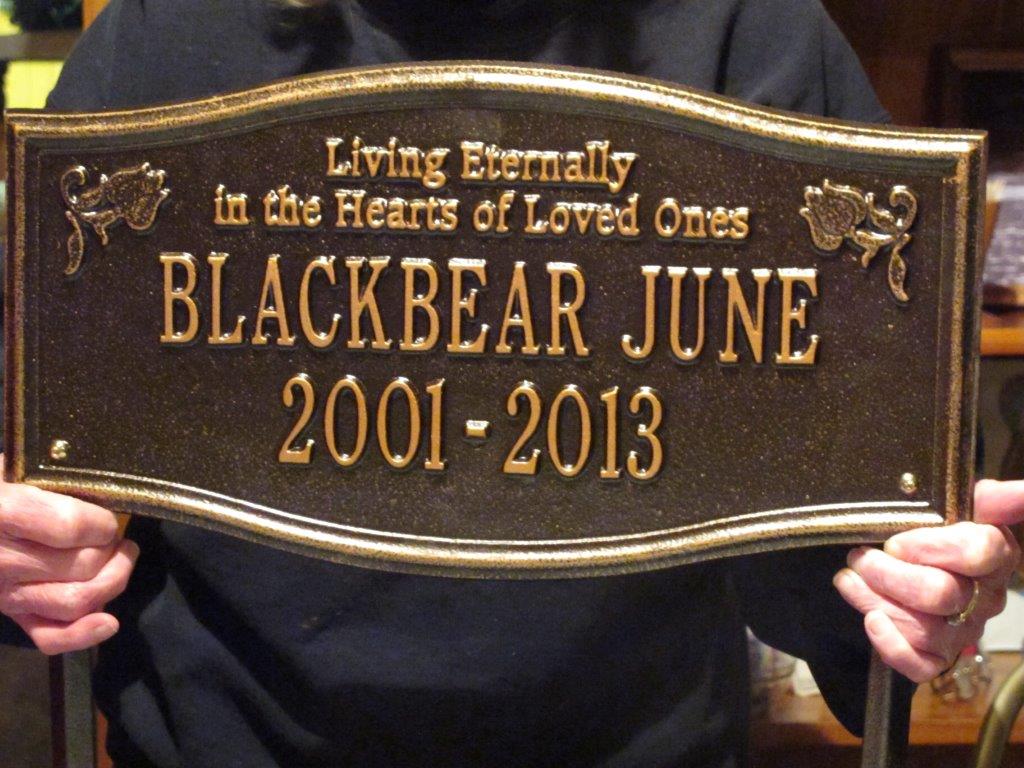 June memorial
A Lily Fan noticed that Kimani and her two cubs were not listed on the new Shadow Clan sheet and asked if she is not a clan member. Right on. She appeared enough to get a name to identify her in our notes, but she is not from the clan.
Thank you for all you do.
Lynn Rogers, Biologist, Wildlife Research Institute and North American Bear Center