
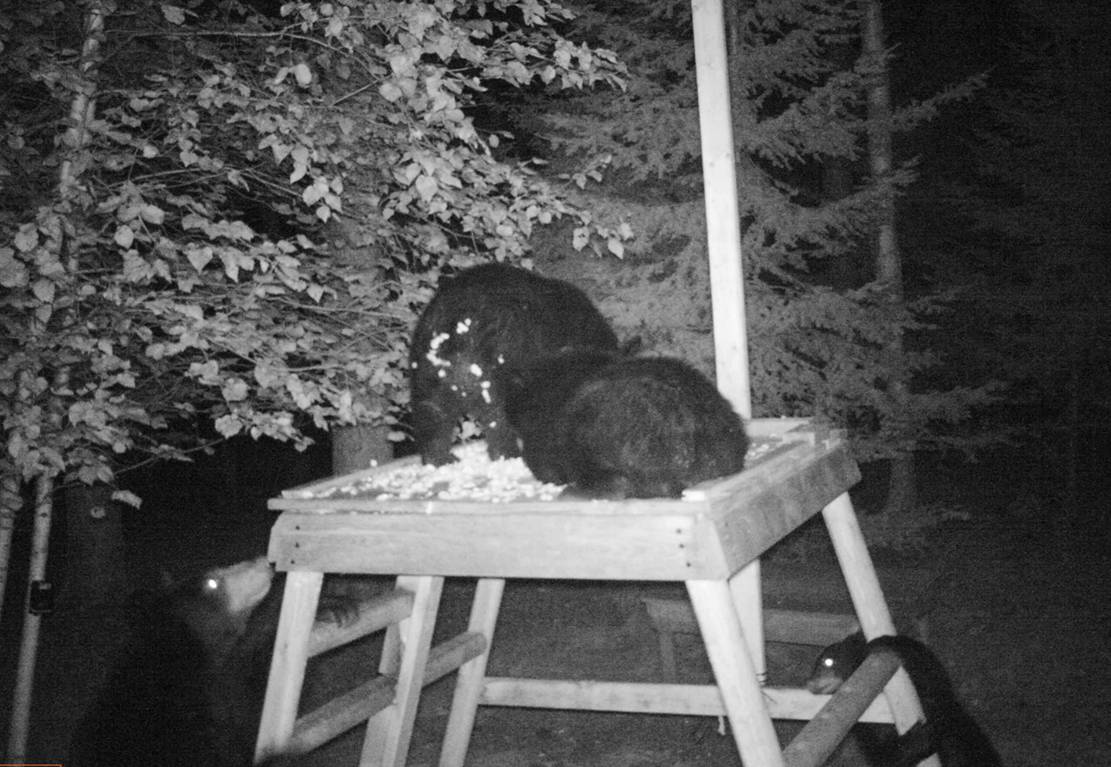
 Lily and cubs on trail camAt the Bear Center, Holly seems determined to make her own den again. Not only has she excavated the beginnings of the den we showed a few days ago but she is enlarging her den of last winter to fit her larger body.
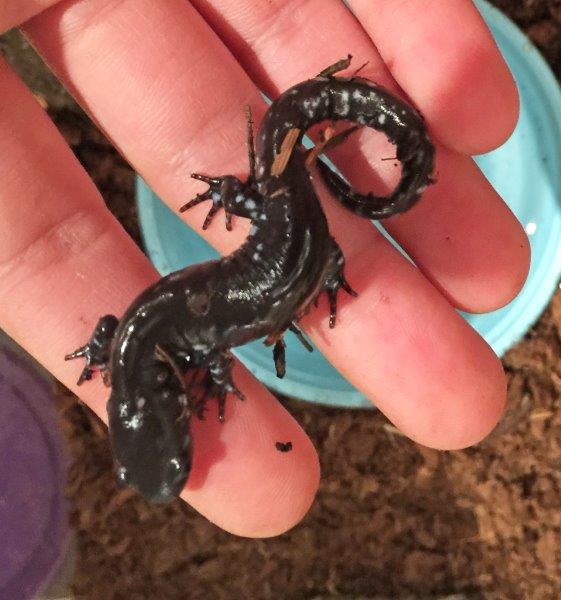
In the Ecology Hall, a new resident is a blue-spotted salamander (Ambystoma laterale) that lives in eastern Canada, New England, and here in the Great Lakes Region.
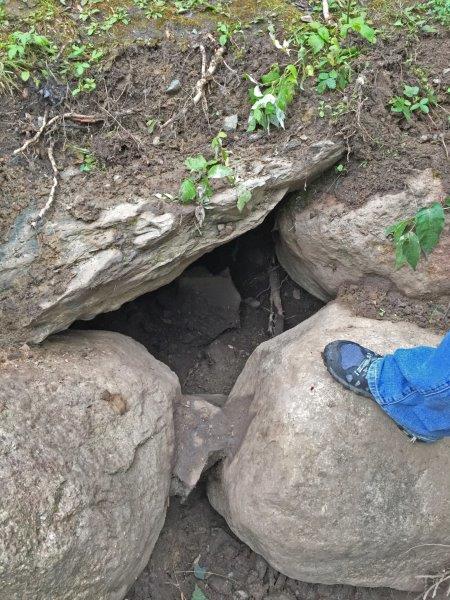 Holly's dug denA note on the two bears on the picnic table a couple updates ago (seen here): The one on the left is Fern. The one on the right joined her, and they not only fed head to head, but they rubbed their faces together. We don’t yet know who the male is, but the behavior suggests that she mated with him and he is the father of the cubs she will likely give birth to this coming January (2016). We very much hope to get a Den Cam in her den. We saw her born. Now we want to see her be a mother.
From 8-year-old Lily’s behavior, we have an idea where she might den with her cubs so we can observe their behavior as they turn into yearlings. The nursing behaviors we saw with yearlings so far was unexpected and not previously reported. It will be good to add another winter of observations to our sample size.
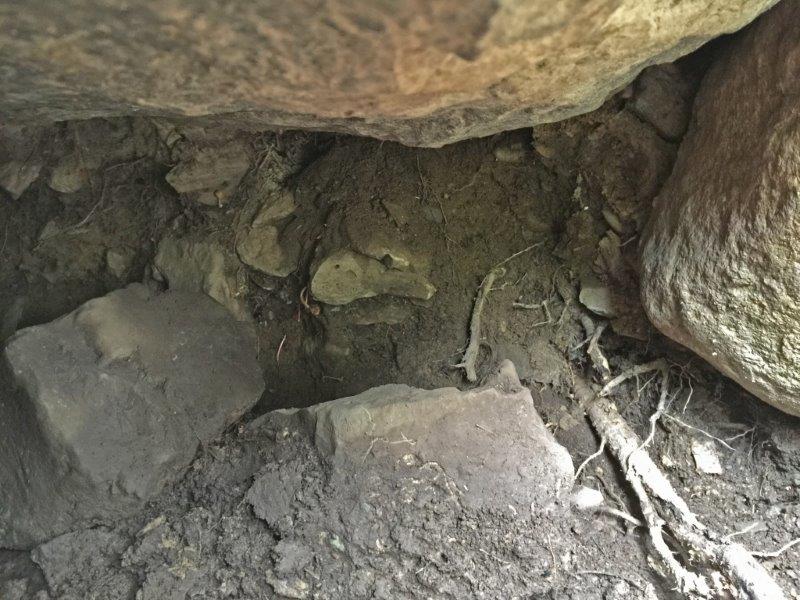 Holly's dug denFern’s pattern of sightings is giving us clues for her, too. Her heart rate a few minutes ago was 85/minute. We’ll watch that rate fall as she approaches hibernation. As hibernation time draws near, community feeders will watch for dirt in her fur from digging a den. That would mean a call to us and an opportunity to follow her to her den.
3-year-old Sophie and 6-year-old Jewel are other top candidates for those kinds of observations and opportunities.
 Blue Spotted SalamanderDen Cams are exciting to think about from the standpoint of learning, sharing, and what they do for this economically depressed region. I’m writing an application for a Den Cam permit. I know the Appeals Court Judges gave me permission to install Den Cams, but I do want to work cooperatively with the DNR and would prefer to have a permit. It would be easier, of course, to find the dens by homing in on radio-collars as we have always done.
We heard back from a Ph.D. candidate who is working on bears and attended our last Bear Course. She wrote, “These special animals need advocates, and I hope to be able to use my life to serve them in some capacity.” So many course graduates express similar desires.
We recognize that people who get to know bears through the Bear Courses and the Den Cams tend to become advocates for bears rather than wanting to shoot them. We recognize that this is a basic difference between our research goals and the DNR’s campaign to recruit hunters, which the DNR called their “primary clients” in an email from DNR Chief of Wildlife Management Dennis Simon dated April 23, 2012. The DNR continues to try to end the courses and the Den Cams. We have on our side the judges’ words that we can continue both. Maybe the DNR’s response to our Den Cam application will provide a light at the end of the tunnel.
Thank you for all you do.
Lynn Rogers, Biologist, Wildlife Research Institute and North American Bear Center
All photos taken today unless otherwise noted.