
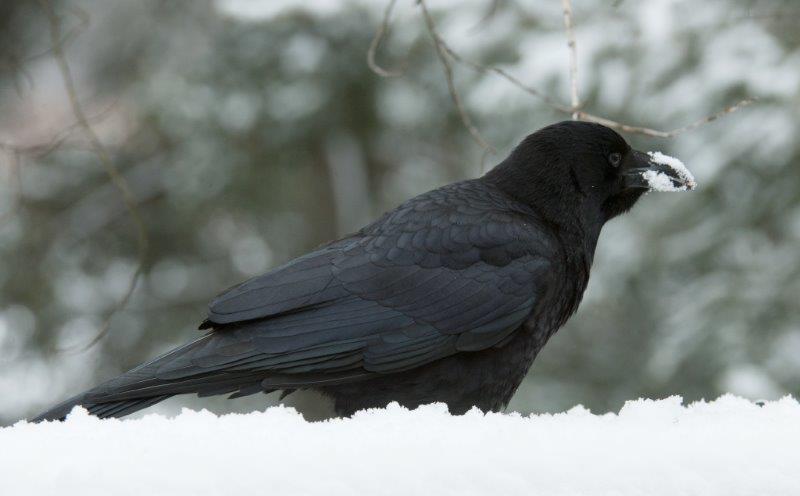
 Crow with snow covered beakWith a fresh snowfall overnight, I checked for bear tracks. None. Trail Cams in the community have not recorded a bear yet, either. In fact, I’ve not heard of any bear sightings despite the early snow melt. We’ve long hypothesized that the annual cycle of activity and hibernation is genetically programmed to coincide with annual cycles of plant growth and fruiting that vary with region. When there is an early spring like this year, it’s a chance to see if bears respond to the nice weather or hold to their usual schedule.
 Benches Charlie madeOver the millennia, bears that got up and began foraging for food when there is a freak weather pattern would be at a disadvantage because the freak weather doesn’t produce food, at least in this region. On the contrary, bears that held to a strict schedule in areas where there is a likelihood of food in winter would be at a disadvantage. For example, during a good beechnut crop in New Hampshire, bears continued to forage down through the snow to get nuts all winter. Same response to winter food availability in other eastern forests where a good acorn or hickory nut crop might give them an edge by foraging through the winter. Those bears are flexible, as they should be, while bears here are the opposite. They abandon abundant supplemental food to hibernate on schedule, and very few emerge before the last week of March (usually) if there is unusually warm weather and the snow disappears. Those that do emerge do not roam. It’s mainly that it’s nicer outside the den in milder temperatures than they have in dens where the frostline continues to go deeper all winter, making dens colder than outside when it starts to warm up. So they rest outside their dens, especially if meltwater has made the dens wet or flooded as we saw in the video with June the other day.
 Case of donated collectiblesFor mothers with cubs, a constraint on early roaming is the lack of mobility of the cubs. Another factor may be that it is not wise to lead cubs away from the den before they pass the critical bonding period that ends about the time bears typically emerge. The bonding period, as we have seen, begins about the time of eye opening and goes on for about 6 weeks until about the time of emergence. The end of the bonding period is marked by a difference in cub responses to unfamiliar animals. The change occurs at different times among siblings at different stages of development. We saw these differences frequently in the old days of drugging to change radio-collars in dens. As we got into early April, the smaller cubs would still be trusting and calm when held but their larger siblings would be biting and cuffing, at least at first.
 Donated QuiltAll that said, if bears, especially males, denned within easy walking distance from the feeding stations in this community, we could see them soon now. Bear enthusiasts in this area are on the lookout.
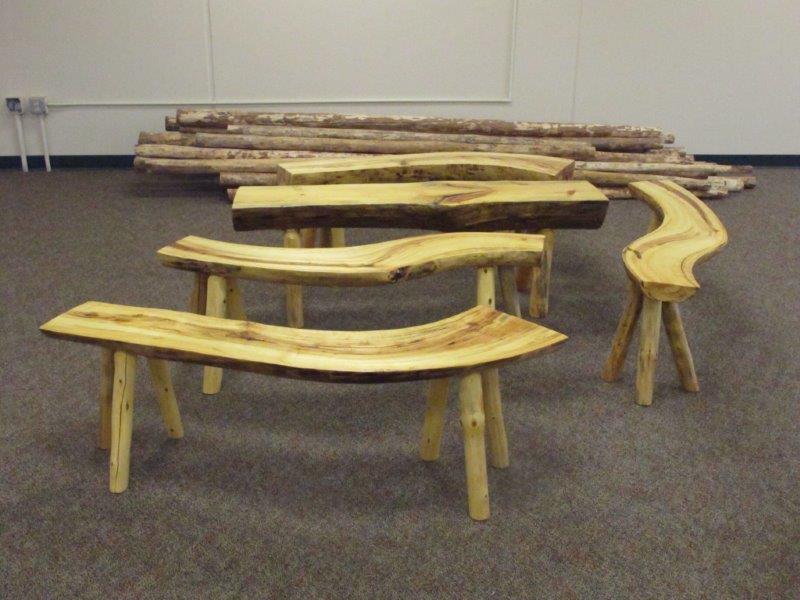
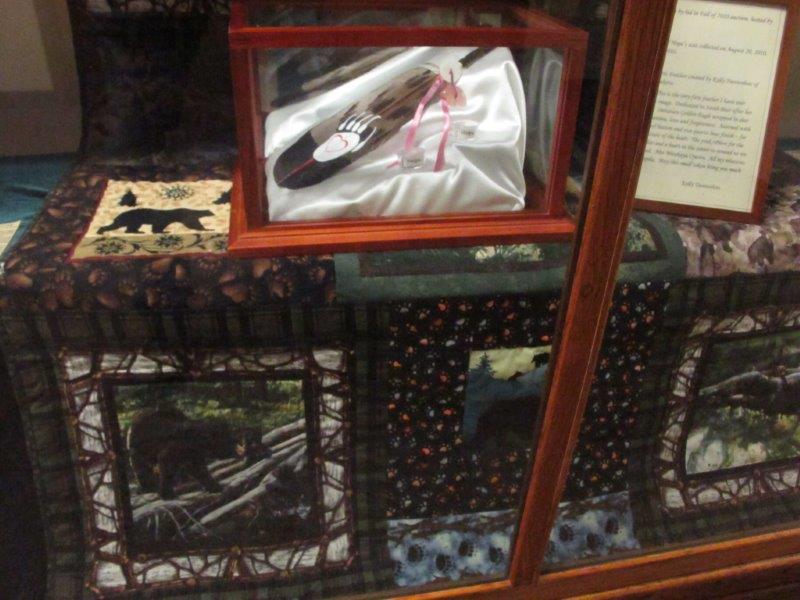 Donated treasuresSpeaking of bear enthusiasts, one of them Charlie Meyer, dropped off 5 beautiful benches for the new Northwoods Ecology Hall yesterday. He cut the wood, cured it for years in some cases, varnished and polished it, and fashioned it into benches like we’ve never seen in stores. He loves to make furniture out of wood. Quite a few people in the area have beds he’s made. For the Bear Center, he does it totally at no charge. Thank you Charlie.
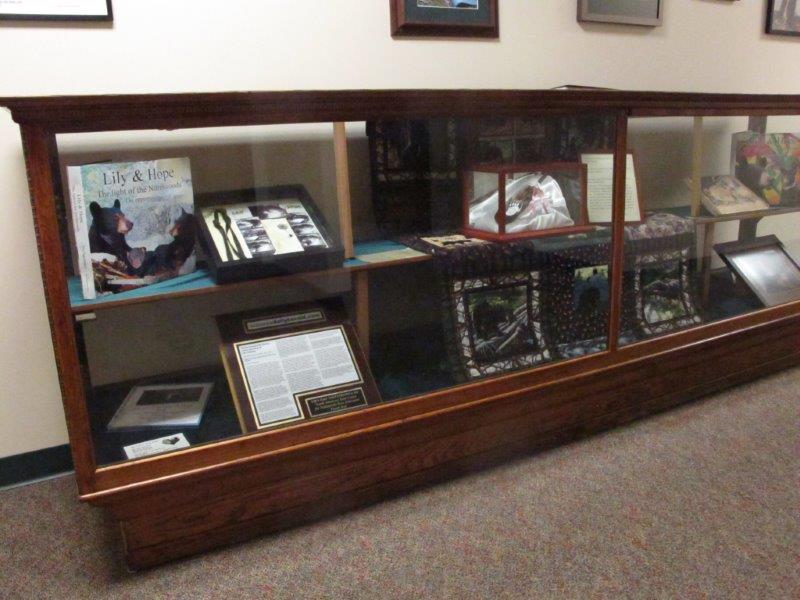
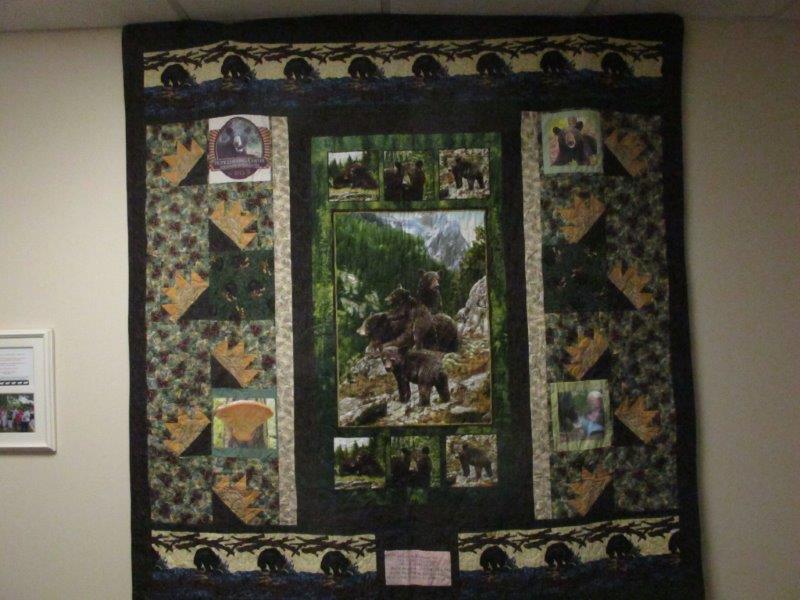
 More treasuresAlso thank you to all the people who have donated quilts, books, paintings, poems, pictures, and artifacts of many kinds in the name of Hope and Lily. These, along with words from many of you, are being put together in a special place for Lily Fans near the entrance to the Hope Learning Center. This is in addition to the exhibit on Lily’s life being assembled where visitors first come into the Bear Center. The pictures give a taste of it. When I saw what the staff had done, I stood there alone with thankfulness and thinking how much has happened the last few years—so many memories and more to come. In addition, Olatz’ five huge books totaling over a thousand pages have been condensed into a single flash drive (under $20) that the staff is preparing to accept pre-orders for. More information on that will follow. The feeling that goes with all of this is thankfulness for Lily Fans and the feeling of caring that comes with them.
Looking forward to seeing Lily this spring, although, with cubs, she may not show until mid-May.
Thank you for all you do.
Lynn Rogers, Biologist, Wildlife Research Institute and North American Bear Center
All photos taken today unless otherwise noted.