
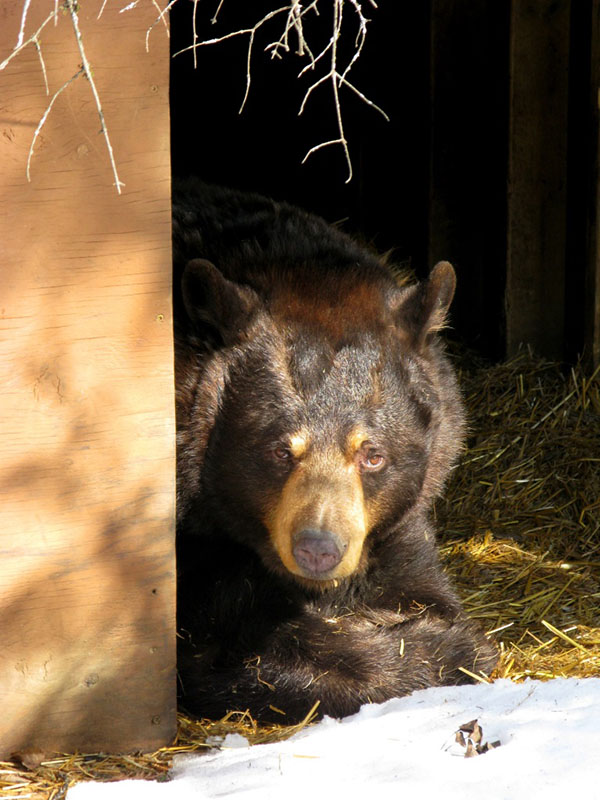
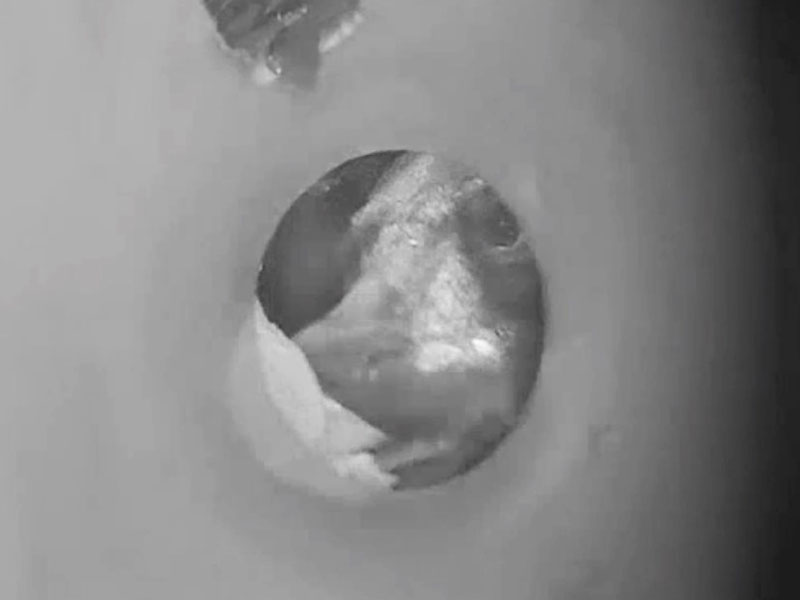
 Honey in her denHolly’s fascination with her Den Cam continues. Today, she got hold of one of the strips of bedsheet we stuffed the tube with to eliminate the hollow, resonating unfamiliar sound. If Holly follows last year’s precedent of leaving the den on April 2, she has about 3 more weeks to entertain herself.
https://www.youtube.com/watch?v=tCQx9mC2e08&feature=youtu.be&hd=1
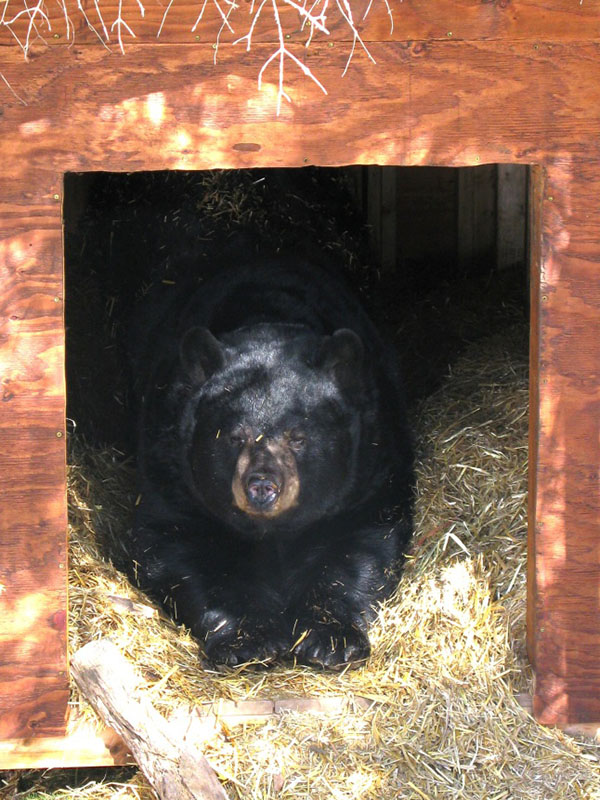 Ted in his denTed came out of his pile of straw to enjoy the mild temperatures (40’s) today.
A couple days ago, Honey checked out her old rock den and returned to her window den a half hour later. She was sleeping immersed in straw in the window den this morning. During the day, she decided she’d rather sleep in the new cabin den that Lily Fans helped make possible. We’ll see where she decides to spend the night.
The highlight video of Juliet and cubs show them enjoying the warmest day (54°F) the cubs have ever felt, and for Juliet, since October 17. The many good views of the cubs showed that two now have their eyes open at least partially and that one has one eye partially open and the other maybe open a slit. Juliet ate snow for nearly 8 minutes beginning at 11:23:04 AM, followed by backing up to use the latrine beside her bed.
Part 1 of 2
YouTube: https://www.youtube.com/watch?v=6uMEQ5wbV_o
Vimeo: https://vimeo.com/121959465
Part 2 of 2
YouTube: https://www.youtube.com/watch?v=gQNcUWeVxYI
Vimeo: https://vimeo.com/121959466
Archives: http://www.bearstudy.org/website/research/2014-juliet-archives.html
A bill introduced in both the Minnesota Senate and Minnesota House of Representatives would ban the feeding of bears.
[97B.427] FEEDING BEARS.
(a) Except as provided in sections 97B.425 and 97B.426, a person may not place,
deposit, or allow the placement of feed to attract bears.
(b) If a bear is feeding on food placed by a person for storage, disposal, feeding
wildlife other than as provided in paragraph (d), clause (1), or other purpose not
specifically exempt in paragraph (d), all food that is accessible to the bear must be
immediately removed when the person becomes aware or is notified that a bear is feeding
at the site. Feed accessible by bears and subsequently removed may not be replaced at the
same site for a minimum of 30 days after removal.
(c) Feeding bear by hand or other physical contact is prohibited.
(d) It is not a violation of this section when:
(1) feed is placed solely for the purpose of attracting and feeding wild birds and
small mammals and placed in bird feeding devices and structures at a sufficient height
or of a design to prevent access by bear;
(2) feed is present solely as a result of normal agricultural, forest management, or
wildlife food planting practices;
(3) feed is placed for agricultural or livestock practices if livestock are present
and actively consuming the feed on a daily basis or if the feed is stored consistent with
normal agricultural practices; or
(4) a person is authorized to place food under a scientific, wildlife disease, or wildlife
damage permit issued by the commissioner under section 97A.401.
(e) A person violating this section is guilty of a misdemeanor.
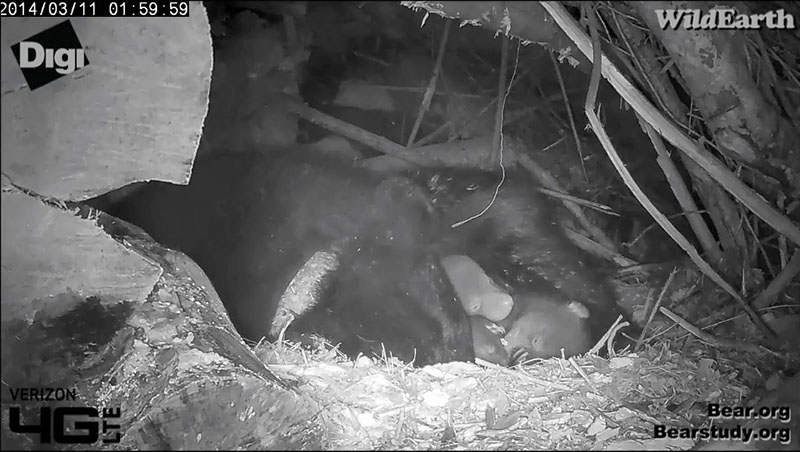 3 sleeping cubs - March 11, 2014This would end the tradition of bear-feeding in Eagles Nest Community where bear problems have been fewer and more benign than in any community we know with a comparable bear population. That’s why residents have continued the feeding this long. For many years, this area had a DNR wildlife manager who knew his stuff when it came to bears. He and I were grad students together. He had no problem with the bear feeding and his records showed that problems were lower in this community that feeds. Then he retired. His replacement fears bears and believes that feeding creates nuisance problems and jeopardizes public safety. He was unaware of the long-term feeding in this community. He checked his records and found no complaints from the community for 8 years straight. He set about creating a record that fit his beliefs. He solicited complaints from residents who visited his office for any reason. He filed complaints in people’s names without their knowledge, without their words, and without make a complaint about any bear. He managed to file 17 complaints in one year.
 Holly with the bed sheetSince our research included feeding bears to enable us to learn how feeding affects bear behavior and ecology, he was down on our study and tried to relate any bear incident in the region to our study. His efforts to build a case against our study got a huge boost when the Commissioner became angry at me, as he told me, over the letters I requested be sent to him in support of protection of radio-collared bears. He told me he was going to limit the number of radio-collars and had some other ideas to limit our research. He then put prohibitions on the Den Cams and rescinded our permit. He and his staff made numerous false statements intended to destroy our reputations as researchers, which drove us to legally defend ourselves.
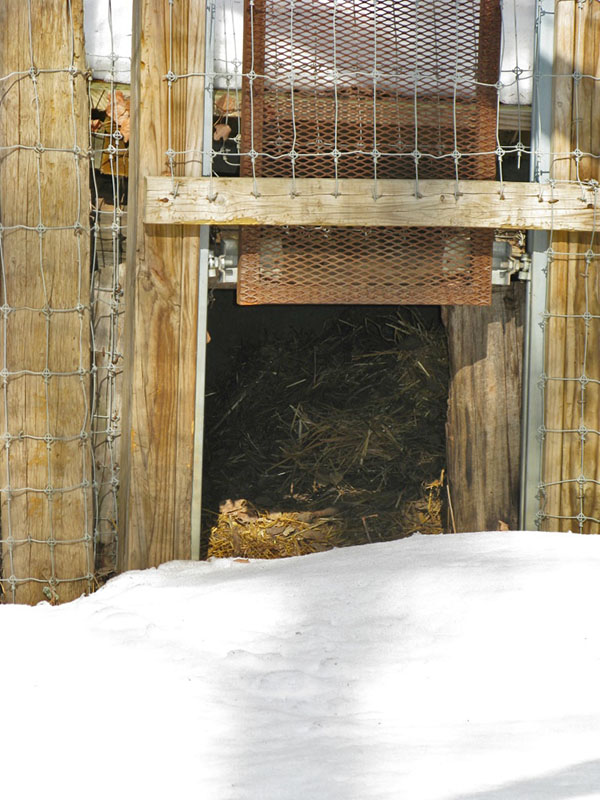 No sign of LuckyNow, in our appeal it appears we have a good chance of prevailing. One of the legal points is that no permit is needed to radio-collar bears that have learned to trust us. This new law would head that off by making it illegal to feed a bear, which is necessary when radio-collaring a bear without the use of tranqulizers.
The DNR is doing a lot of fear-mongering to gain support for its ban on feeding. One statement they frequently make is that we trained bears to go up to people for food. We weren’t aware of that happening and wondered if they would produce any witness to support the DNR statement in the hearing. They didn’t. We produced many witnesses testifying that bears are not a public safety issue in the community.
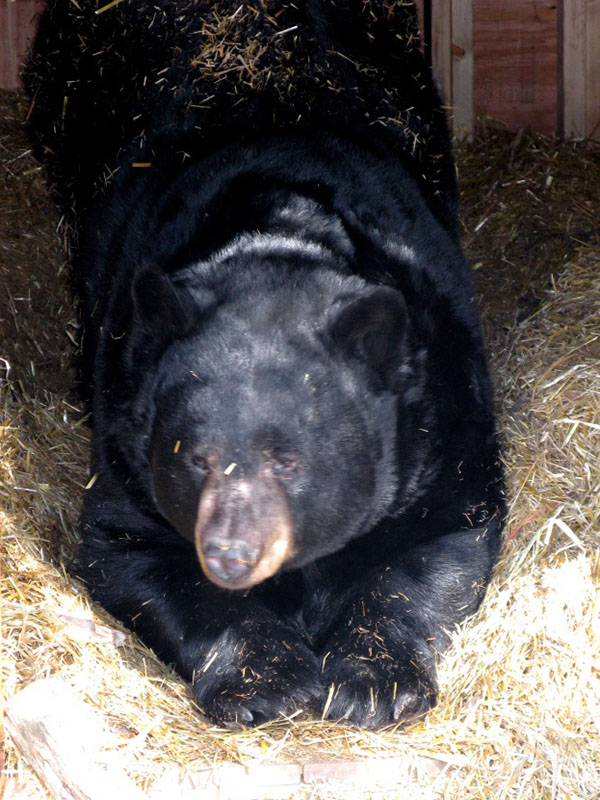 TedThe DNR brought in 3 “expert” witnesses to testify that feeding bears creates a public safety issue, but each of them admitted under cross examination that he had no experience relating to the issues they were testifying to.
The lack of attacks in the community with over 5 decades of feeding showed that any public safety issue claimed by the DNR was very small. We knew from long experience that our research methods would not create public safety issues, and they didn’t, as the record shows.
After all the testimony, the judge ruled that I might be right but that she must defer to the agency in charge. We had no choice but to pursue our pro bono appeal before a panel of 3 judges.
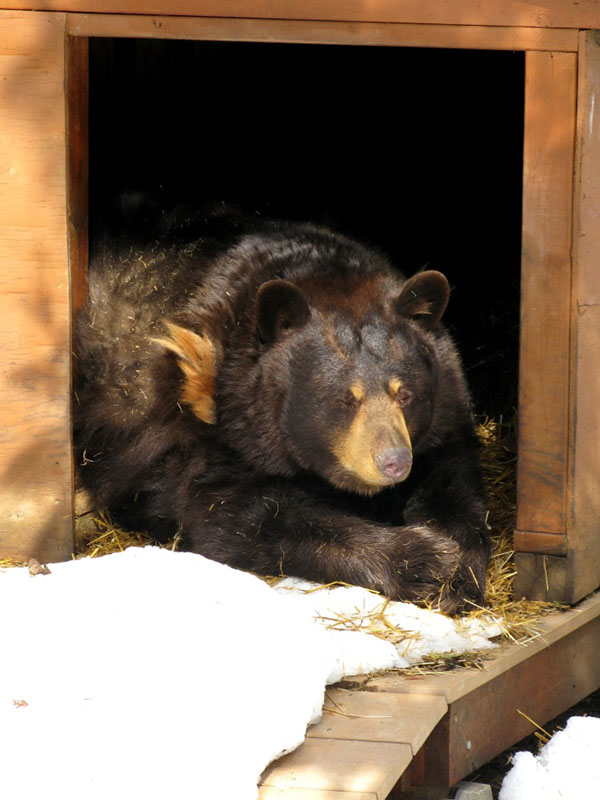 Honey This feeding law is part of the DNR's vendetta against our research. Stopping feeding will be bad for bears—especially in times of natural food shortages. In this community, instead of bears going to longstanding feeding stations, they will likely go from house to house as bears in other communities in this region do during such times, which gets bears shot.
The law will jeopardize anyone who feeds birds or other wildlife in bear country.
If any Minnesota residents would like to contact their state senators or representatives, these links provide contact information.
http://www.house.leg.state.mn.us/members/hmem.asp
http://www.senate.leg.state.mn.us/members/index.php?ls=#header
Thank you for all you do.
Lynn Rogers, Biologist, Wildlife Research Institute and North American Bear Center
All photos taken today unless otherwise noted.