
 Wolf pup and mother - file photoThis was a day of important news about bears and wolves.
 Wolf - file photoFor wolves, a federal court ended hunting of wolves in the western Great Lakes area (which includes this area) and returned them to the endangered species list http://m.humanesociety.org/news/press_releases/2014/12/fed-court-wolf-hunt-season-over-121914.html.
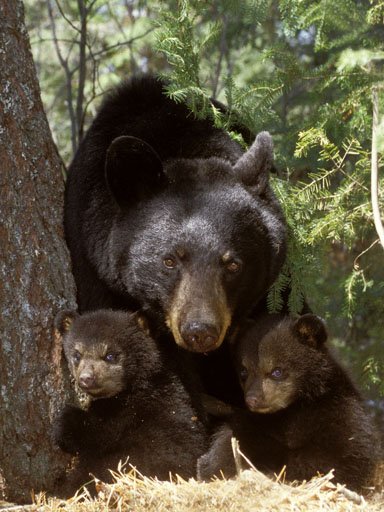 Bear with cubs - file photoFor black bears, Dr. Martyn Obbard, an Ontario biologist, backed up a controversial point I made in the New Jersey newspaper a couple days ago http://www.northjersey.com/news/n-j-bear-hunt-tally-at-267-as-policy-debate-continues-1.1153308?page=all (see the update of December 15). In his study released today entitled “Relationships among food availability, harvest, and human–bear conflict at landscape scales in Ontario, Canada” (Ursus 25(2):98-110 (2014), Dr. Obbard essentially states (1) that food scarcity causes spikes human-bear conflict and (2) that bear hunting does not significantly reduce human-bear conflict unless bear numbers are reduced to very low levels.
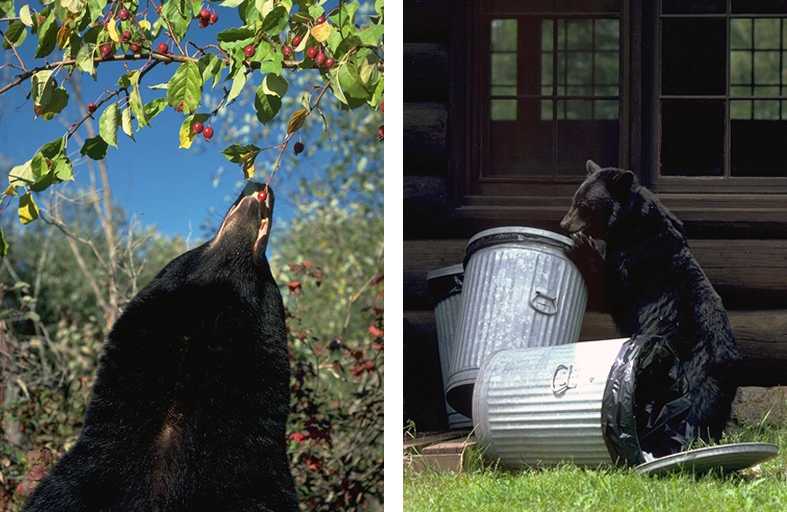 Bears vs trash - file photoIn the paper’s abstract, Obbard et al. stated, “evidence that larger harvests reduce human-bear conflict is lacking” and “Human–bear conflict was negatively correlated with food availability across Ontario,” and that the study produced “no evidence that larger harvests reduced subsequent human-bear conflict.” The authors concluded that, “Given the variation in natural foods, harvest is unlikely to prevent elevated levels of HBC in years of food shortage unless it maintains bears at low densities—an objective that might conflict with maintaining viable populations and providing opportunities for sport harvest.”
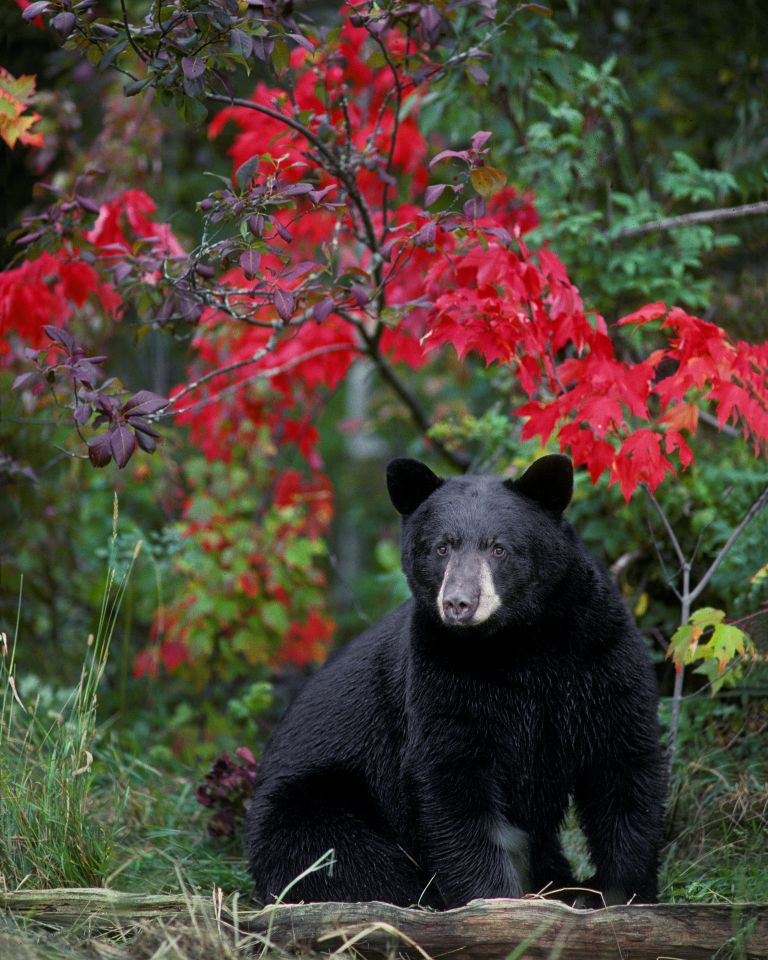 Obbard’s findings back up my findings as published in Rogers, L. L. 1976. Effects of mast and berry crop failures on survival, growth, and reproductive success of black bears in northeastern Minnesota. Trans. North Amer. Wildl. and Natural Resour. Conf. 41:431-438 (click on the title to see the whole paper). That paper was the first to point out that wild foods vary greatly from year to year, making it impossible for black bears to secure an adequate diet in some years, leading to spikes in human-bear conflict.
I’m glad to see a good paper refuting the popular notion that wildlife managers must strive for high harvests to reduce human-bear conflict. I hope this opens the way to more enlightened views on how people and bears can better coexist.
The paper makes points that most Lily Fans already knew.
Thank you for all you do, and congratulations to Marty Obbard and his team for publishing such a well-thought-out paper.
Lynn Rogers, Biologist, Wildlife Research Institute and North American Bear Center