
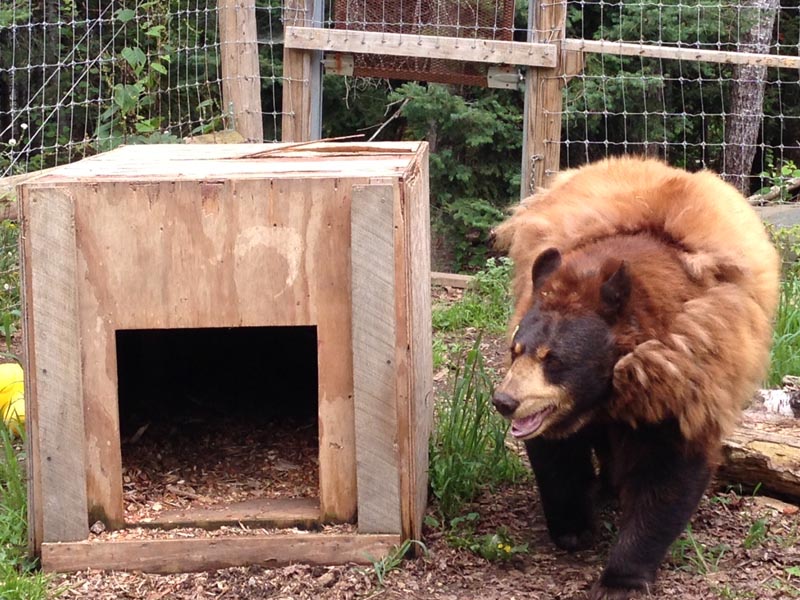
 Honey in Holly's denInquiring Lily Fans want to know about Ted and the other bears now that we know a skin parasite caused Ted to lose hair. We checked with Bear Curator Sharon Herrell and learned that the veterinarian recommended no close contact between Ted and the others until Ted has completed his two weeks of Ivermectin treatment. During that time, Ted will get out a couple times a week, which will mean locking the other three in their pens each time.
It’s unlikely the other bears have the Pelodera parasite. We thought Holly might have a problem when she arrived with an odd loss of fur from scratching (Pelodera causes itching), but her fur is growing out beautifully now. Pelodera often disappears if bedding is too dry to support re-infection, and Holly has had dry conditions.
Ted’s pen is prone to wetness, which is why the staff moved him to the new higher, drier pen created with the help of Lily Fans. Between the Ivermectin and drier conditions, Ted should respond quickly. With 3 months to go before he settles down for the winter, we suspect the lost hair will re-grow, but it’s a matter of wait and see. Whatever the case, he’ll get plenty of straw to snuggle into.
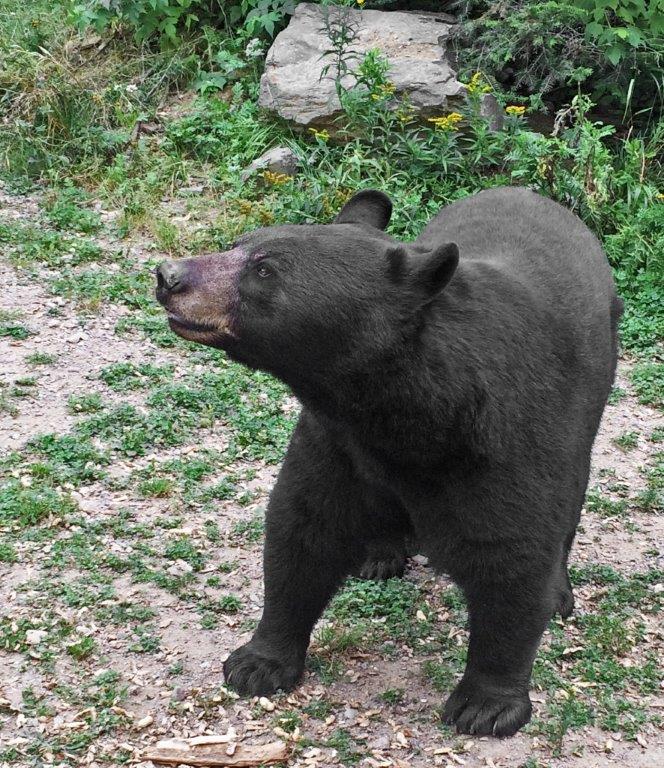 Lucky BearFor the other bears, Lucky got fresh straw a couple days ago, and all the dens have been sprayed with cedar oil to rid them of parasites. For Ted, volunteers are stepping up to take his chalet apart, clean it piece by piece, and rid his ground of damp and wet materials.
Ted is now up to 587 pounds. Amazing, considering that he weighed 504.5 on July 21. That’s up 82.5 pounds in 33 days, which shows we are over-feeding him, according to the veterinarians.
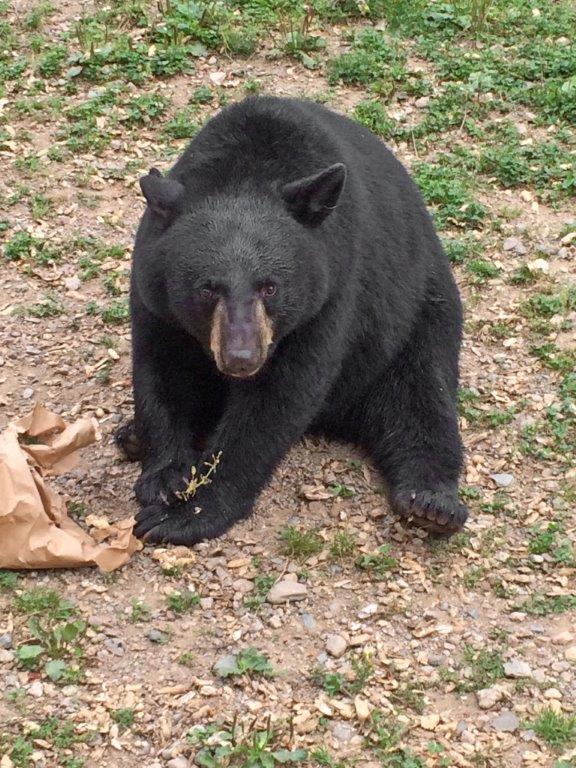 Holly eating grapesLynn misspelled Pelodera last night (Peloderma). He must be slowing down or trying to type too fast. Pelodera sp. causes Pelodera dermatitis. Sp. means no one knows the species of Pelodera nematode involved.
The picture of Honey in Holly’s pen shows how thick her fur was through the winter. We don’t know why she sheds so late. We don’t know where her genetic heritage is from.
Lynn had a nice talk with Dr. Stephen Stringham today about bear habituation (bears becoming accustomed to people). Steve is excited about the project we’ll be doing here over the next 3 weeks. He has started a paper on bear habituation and immediately asked if we’d like to collaborate. He agrees that habituation among brown bears is location specific to a large extent, just as we found with black bears and will be getting more data on in the upcoming project.
 Sunflower at the NABC
We agree that some bears can adapt to a broader level of habituation, which is what enabled us to walk with some, June, Lily, and a few others. June was unusually tolerant, which is what made her so valuable to science.
Steve, founder of the Bear-viewing Association in Alaska, sees the same thing with brown bears. Steve takes notes summer after summer as he leads groups to see brown/grizzly bears, and then writes scientific papers from his observations. We look forward to this fall when Steve returns to civilization and will be easier to catch on the phone. We’ll likely collaborate with him on several papers.
Meanwhile, the 14-15 Lily Fan volunteers who will be mapping bear trails and documenting bear reactions to passersby are packing to come. One of them, though, will first go to Alaska to do brown bear viewing with Steve, which should make for good discussion around the dinner table when she arrives here.
Thank you for all you do.
Lynn Rogers, Biologist, Wildlife Research Institute and North American Bear Center
All photos taken today unless otherwise noted.