
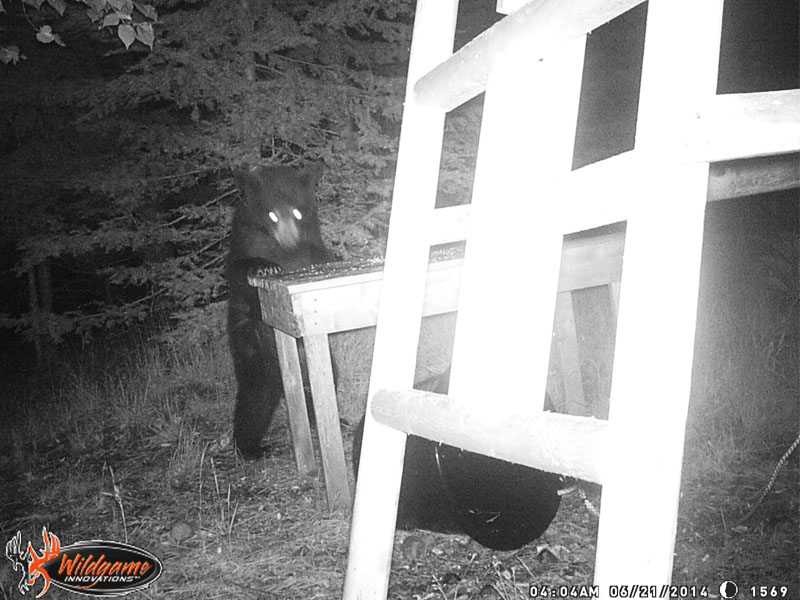
 Ember on cam - 6-21-14Finally, Ember was caught on the trail cam at the feeding site she and Cole used last fall. It’s another confirmation that orphaned cubs can survive the winter and don’t need to be put into captivity—and this was an especially harsh winter. Cubs have the instinct to make a den even though their mother would normally do most of the work for them. There’s a lot of variation in bear dens, and those made by orphaned cubs look as good to us as other dens.
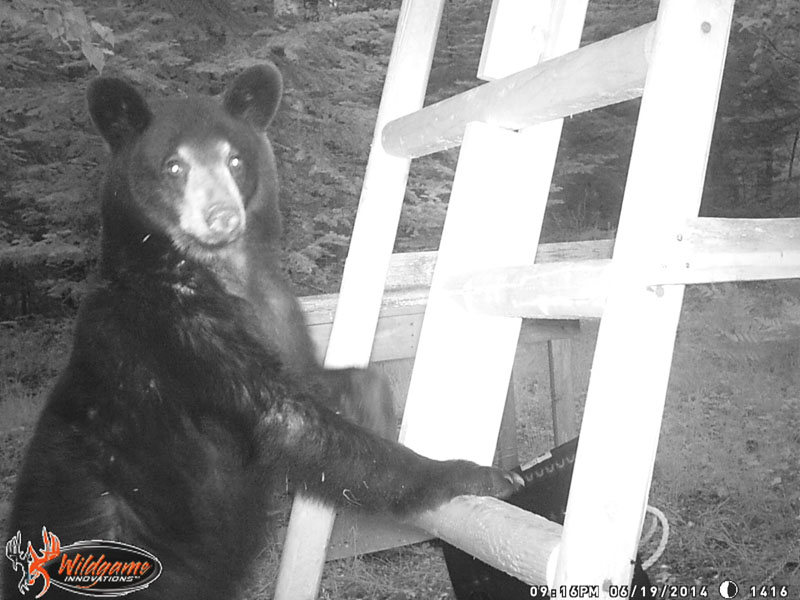 Cole on cam - 6-19-14Lily (7) made an appearance at a community feeding station today. We were notified and hurried over. Lily was her usual independent self. She looked up when we came into the yard, recognized us, ignored us, and continued eating. Then she got up as if to see if we brought something better but stopped to scratch her foot as we walked
 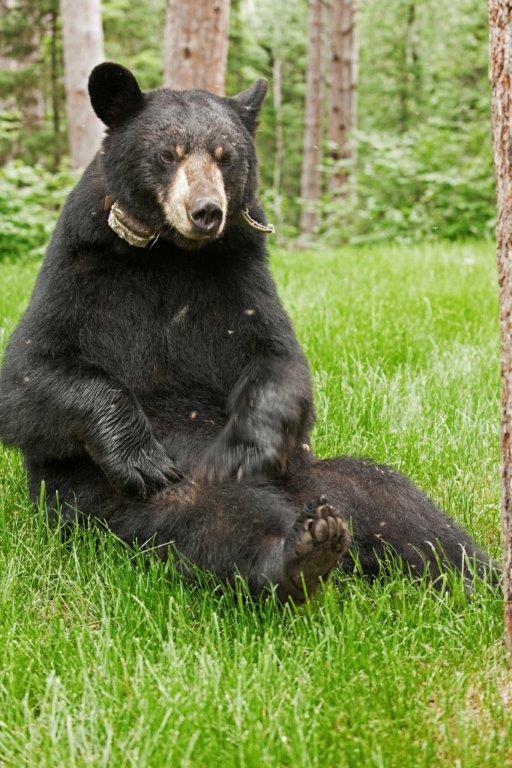 Lily Scratchespast her within 5 feet without her paying any attention. Then she sat down and scratched away some old shedding fur as bears are doing now. In her own good time, she sauntered over.
She is a research partner who knows us well. There is no other research bear at this time that is as comfortable with us. We know of no other bear in the world being studied in this way. When she saw another bear arrive—a 2-year-old male—she tore after it. Both disappeared in the woods. The 2-year-old circled back, but Lily moved a quarter mile to another of her 3 favorite feeding stations. The 3 don’t include the WRI. She prefers the 3 she grew up with.
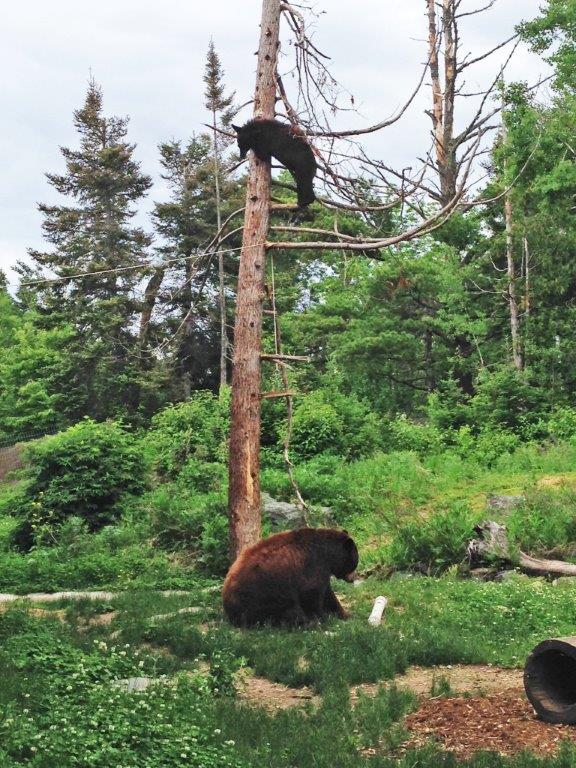 Holly and Honey
There is something different about the way Lily looks at us. When other bears look at us, we wonder what we did to merit a look. With Lily, we see calm comprehension and trust.
At 10:13 AM, Lily headed out to where there are no people and no feeding stations, and she seemed anxious to get there, moving 1.35 miles per hour, which is a good clip. She has her own agenda and it doesn’t include us except for the brief moments when we offer her a favorite food at the right time. Even then, as today, she sniffs the food carefully before daintily 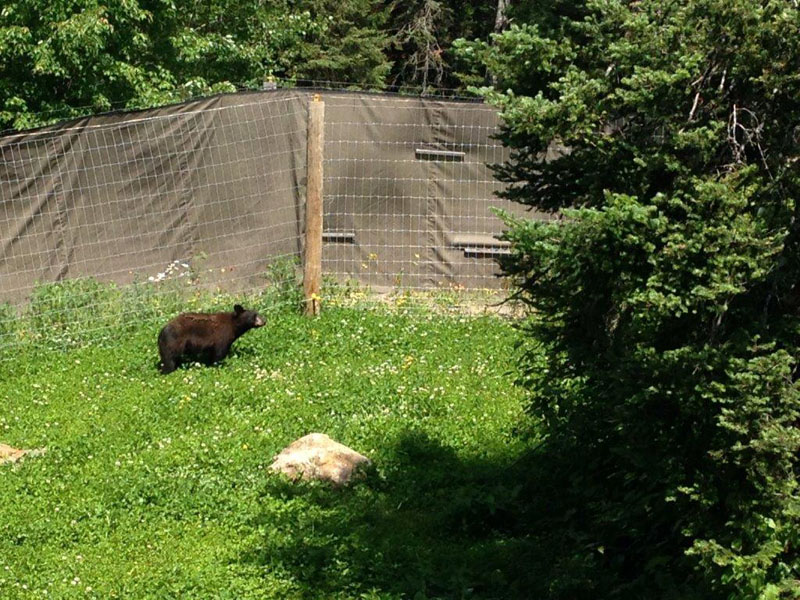 Holly in cloverextending her tongue to accept it. We knew it had to be good for Lily, and it was—nuts Lily Fans ordered for the bears. Thank you from Lily and us. Today, the purpose of her travel may have been to patrol her territory, perhaps knowing she will need plenty of space next year when she has a new litter and will then need space for any daughters to settle. She undoubtedly is feeling pressure from her daughter Faith (3), half-sister Aster (3), and aunt Ursula (9).
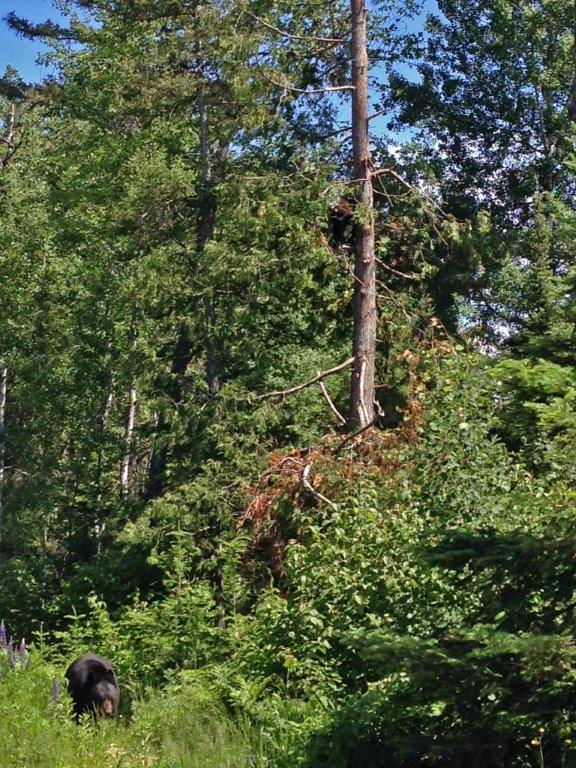 Holly and Lucky
Holly is doing what other yearlings do at this stage. She is being wary and spending a lot of time up trees. She seems to know the good trees to use for lookouts. When she sees the coast is clear, she forages in front of the viewing windows or over in the clover patch where she was photographed from the viewing balcony. She knows she can escape up the cedar tree in the viewing area as she did when Honey arrived. Back in the woods, she climbed another cedar when Lucky appeared.
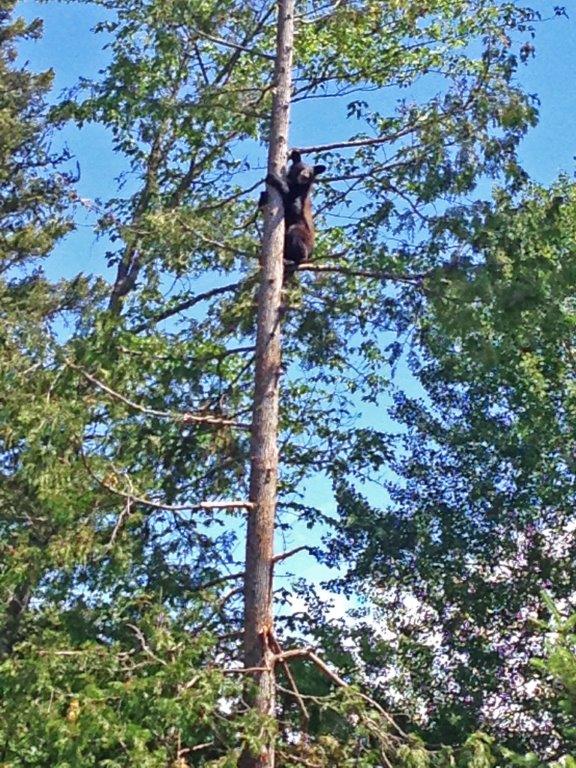 Holly in Lookout TreeIn our studies, we have been surprised how wary yearlings are, even when it is a yearling that knows us from our walking with its mother when it was a cub. Then, as 2-year-olds, they get more confidence and may become a bear we can walk with.
Nature Notes:
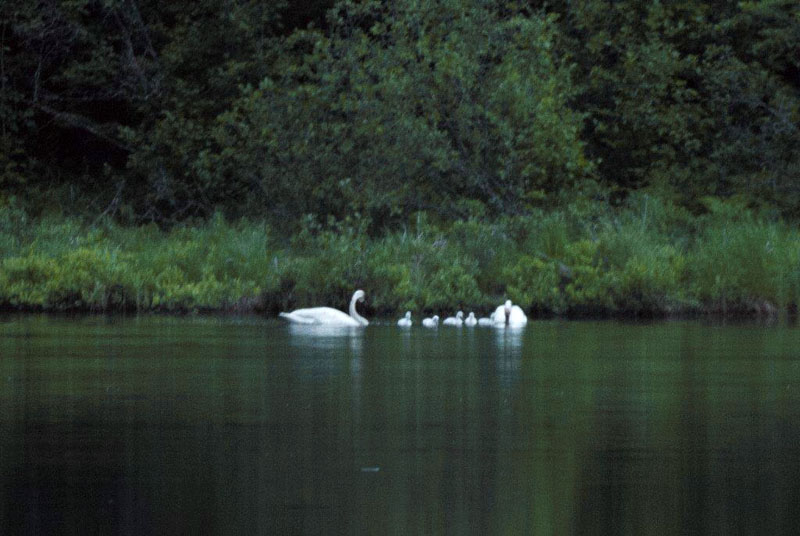 Trumpeter Swan FamilyOn the way to work, Lynn noticed 2 swans together on the lake where we watched the newly introduced Trumpeter Swans last year with 4 young. The sun wasn’t up yet, but Lynn attempted a picture from his vehicle at 1/13th of a second from 0.16 mile away. The big swans, with wingspans nearly 10 feet, separated as they fed, revealing 5 young—click. Later, Sue saw the family right beside the road—apparently looking to cross it!
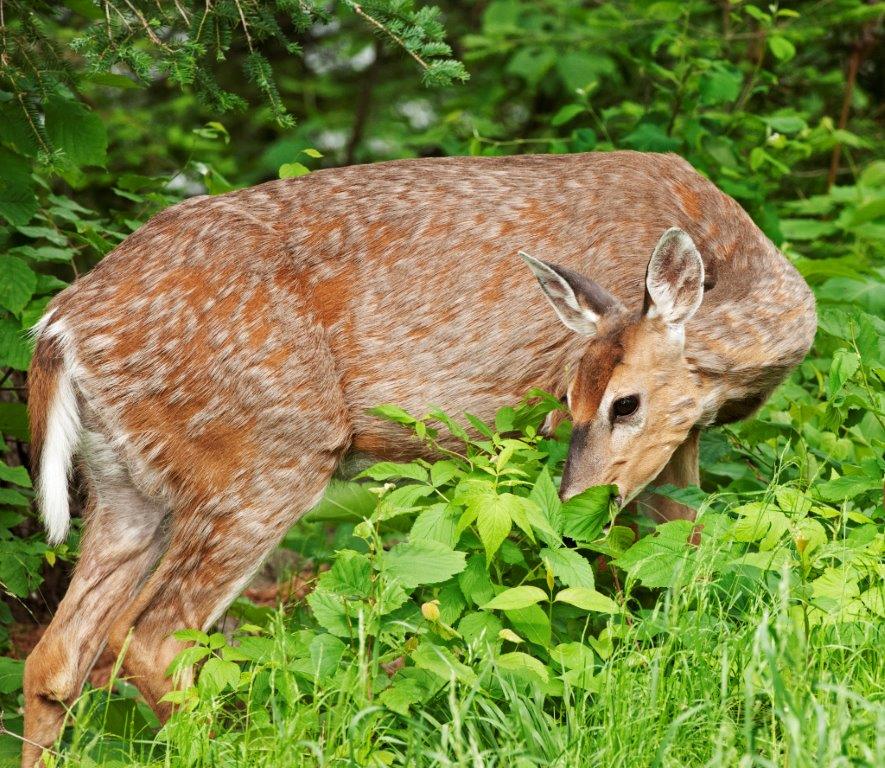 Doe shedding - 6-21-14Deer are shedding. This lactating mother likely has a 3-week-old fawn somewhere in the vicinity. Average date of birth around here is considered June 1. She bit a leaf then lifted her head so we could identify it as a hazel leaf. Lynn still can’t help looking to see what they eat after walking with deer for over 4 years back in his USFS days. Everyone on the team became good at identifying leaf fragments as fast as the deer grabbed them.
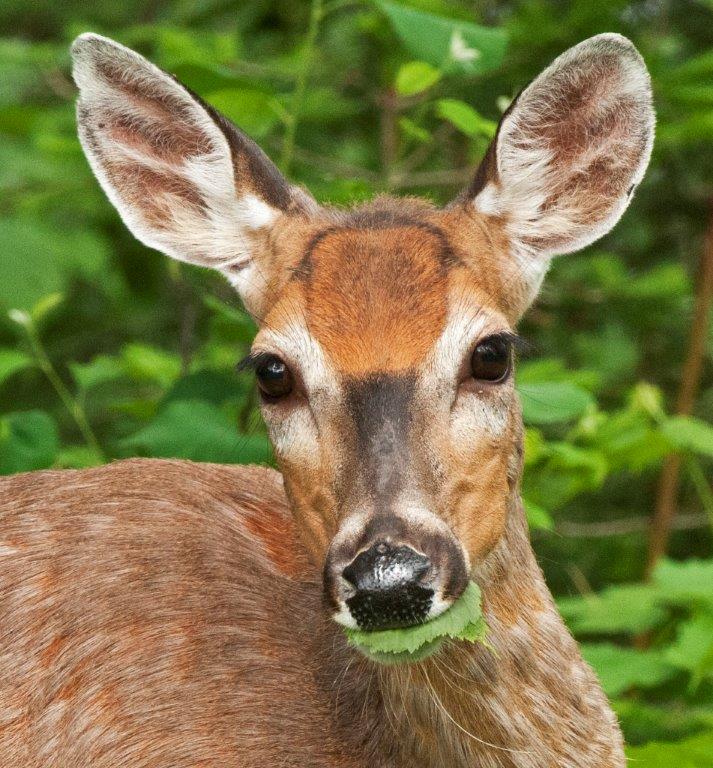 Doe w/Hazel leaf - 6-21-14
Tiger swallowtail butterflies, one of the largest and brightest butterflies in this area, are now getting tattered as it gets late in the season for this early butterfly.
We noticed the hooded merganser taking a break from incubating and counted her eggs in the nest box—still 11.
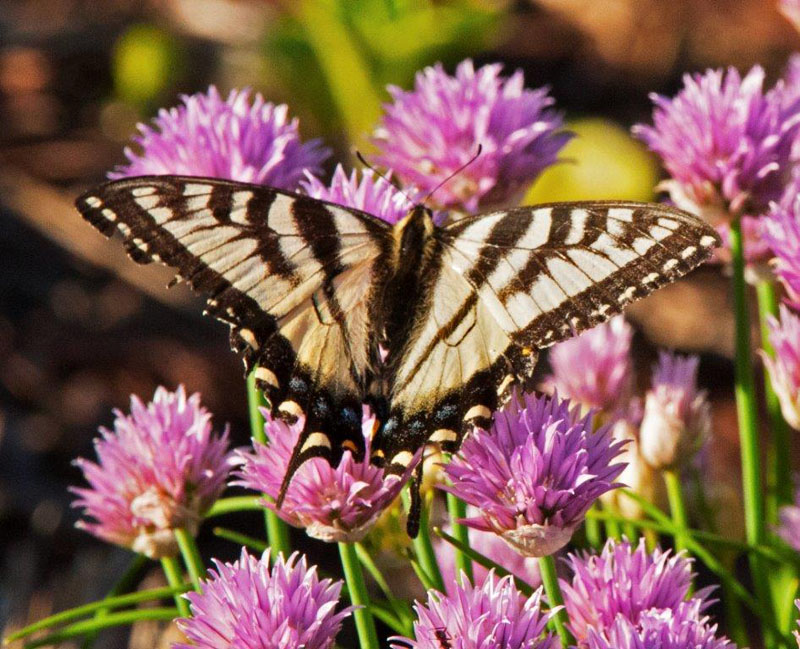 Tiger Swallowtail - 6-18-14We’re still glowing about the fun of yesterday at the Half Birthday Party for the Bears. We saw so many volunteers step up to help make it a success. Thank you for all of that and the donations Lily Fans sent.
Thank you for all you do.
—Lynn Rogers and Sue Mansfield, Biologists Wildlife Research Institute and North American Bear Center
All photos taken today unless otherwise noted.