
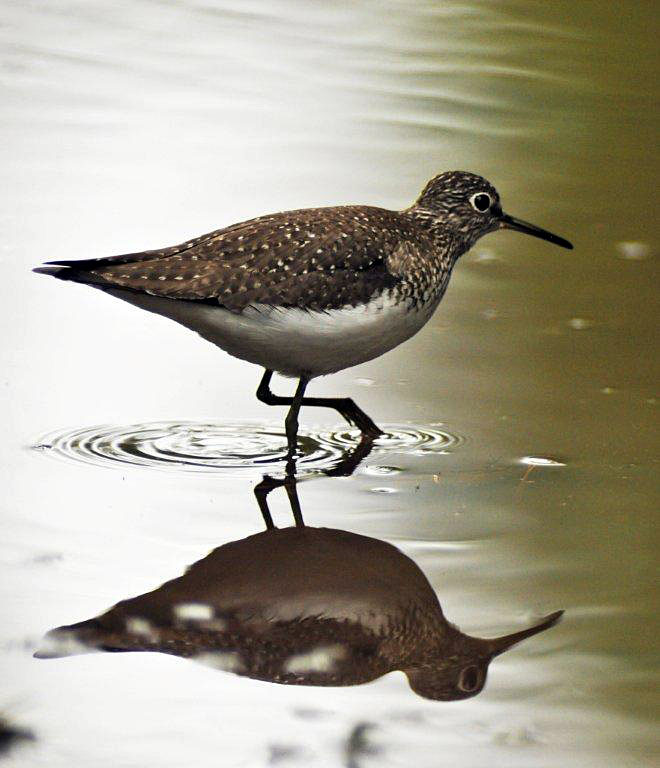
 Solitary sandpiper - May 28, 2012A storm blew in with a vengeance overnight, but the major snowfall was to the north and only half an inch or so accumulated here by morning. Snow covered the ground and vegetation. By afternoon, above freezing temperatures (36F) and ground not yet frozen had melted the snow.
Meanwhile, Glenn checked 3-year-old Star’s signal. It was coming from the area of a den where he found her a couple days ago. She seems to have settled in where we expect she will have her first litter of cubs in January.
We’re getting calls asking about the chances of success for cubs orphaned during the bear hunt. Years ago, we radio-collared orphaned cubs and they managed to make dens and survive the winter weather without the know-how and warmth of their mothers. However, they had a higher than usual death rate from accidents (roads, power lines, predators).
This was a good year for bird sightings on the Wildlife Research Institute’s 60 acres. Today, we added a new species to the property list—a Varied Thrush (Ixoreus nevius) that normally lives in Alaska and the Pacific Northwest but is noted for occasional sightings as far east as New England in fall and winter. Four other new species seen on the property this year are Wild Turkey (Meleagris galopavo), Red-necked Grebe (Podiceps grisegena), Solitary Sandpiper (Tringa solitaria), and Northern Parula Warbler (Parula americana) to bring the property total to 139 bird species since 1996. The ‘transitional’ forest here has components of both the deciduous forest to the south and the coniferous forest to the north. As a result, it supports a greater than usual diversity of birds and other wildlife.
Much of this windy, snowy day was spent arranging for a larger loan for the new building that will include the Hope Learning Center. We see your donations and are thankful. We are also thankful that Team Forward fixed and weatherproofed the door here.
Thank you for all you do.
—Lynn Rogers and Sue Mansfield, Biologists, Wildlife Research Institute and North American Bear Center