
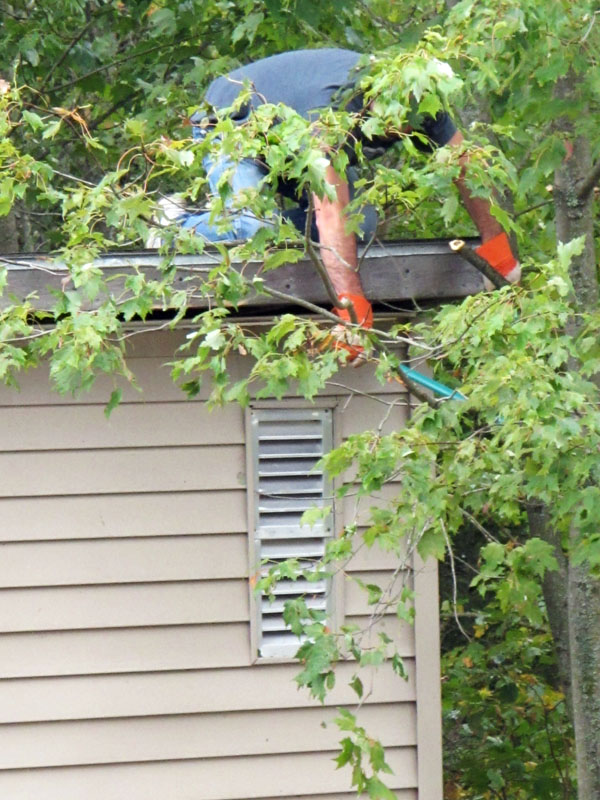
 Some volunteers go to great heights to help! Although we were premature in our enthusiasm about June settling down, the radio-collared bear situation is copacetic. We looked up ‘copacetic’ and it‘s slang for ‘excellent’ or ‘first rate,’ which is what we wanted to say. All the bears are transmitting and appear to be safe.
 Creative carpentry!Dot and her 3 cubs are deep in a roadless area known for its acorns. Oaks are not widespread around here. Dot is in the same general area where June made a 15-mile trip for acorns in 2005 and scared us by disappearing during hunting season. Thank goodness we now have GPS to obtain detailed data on the bears’ movements and habitat use.
We haven’t said a lot about 12-year-old Dot in the past. She was the first cub we saw in a den in the Shadow’s Clan study, as is shown in the Animal Planet documentary, “The Man Who Walks With Bears.” She is the cub we lifted from under her mother Blackheart’s nose in 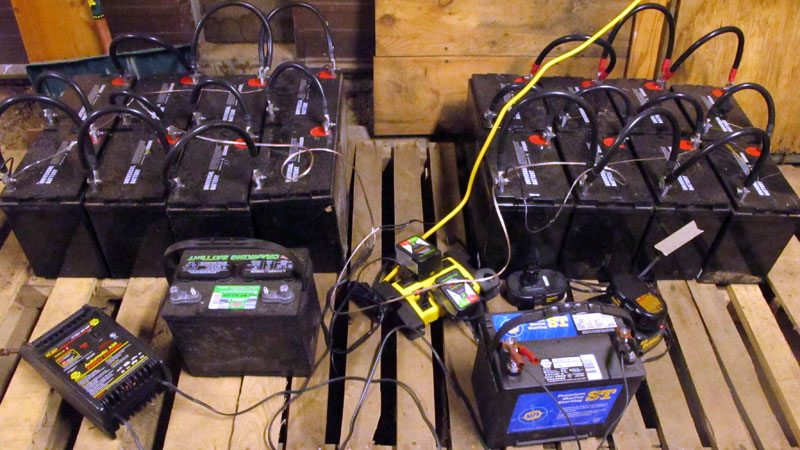 Batteries trickle-chargingthe den. She is the cub that rested on Lynn’s lap and was weighed as her mother watched from a couple feet away. We did everything we could to gain the trust of Dot and Donna from the earliest age, hoping they would grow up to be bears we could walk with and let the world learn along with us.
 Hmm... over? under?According to some, these bears should have become nuisances and have their lives drastically shortened for being “habituated” and “food-conditioned’” but that’s not how it turned out. Sometimes what makes human sense doesn’t make bear sense. Losing fear of researchers did not turn these bears into dependent, aggressive nuisances that jeopardize public safety. Certainly they would at least walk up to hunters and be killed before reaching the age of 3, which is the average age of females taken during the hunt. They are now each 12 years old and not generating any nuisance complaints we are aware of. We continue to learn. One thing we are learning is that habituation and food-conditioning are not what make nuisance bears. Hunger does. There is so much more to write on this and the many things the bears have shown us all regarding how bears live.
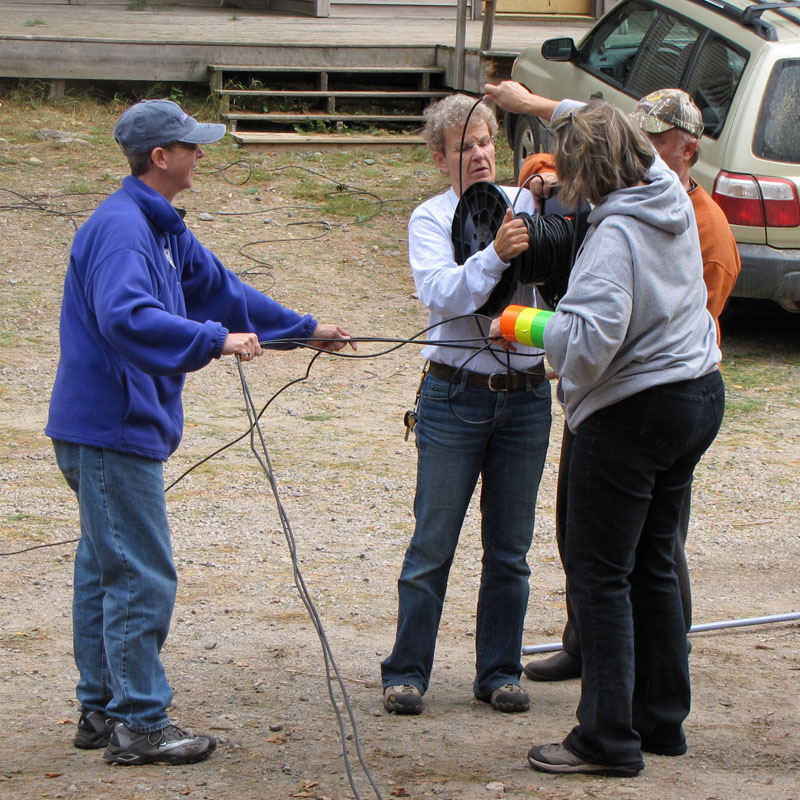
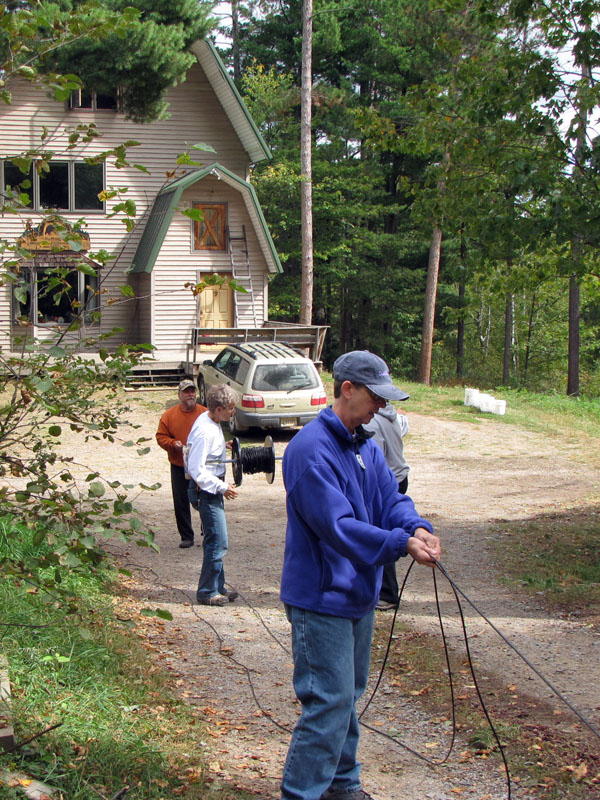 The 'chew check' crewThe volunteer team put in another hard day monitoring the yearlings and doing other work. Thanks to these volunteers, the carport (used as a storage area) now has lights and electricity, and the batteries for the Den Cams are getting trickle-charged there in preparation for this winter. The volunteers checked the den cam cables for damage and rewound them to facilitate their reuse this winter. They also finished shoring up the collapsing garage. They are a cheerful group full of boundless energy! Dinner tonight was again thanks to Lily Fans. We all thank you.
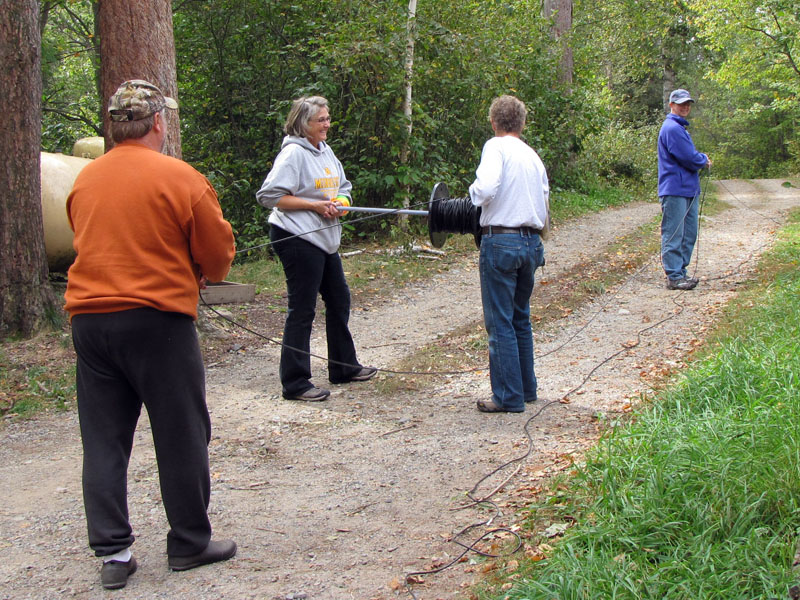 Everyone, face your partner...We’re thankful that radio-collared bears are not being killed this hunting season. Our studies can continue. There is so much to learn. There is so much to share. Education about bears is the most important thing that can be done to preserve bear populations. People are moving into bear country like never before. By learning about their furry neighbors, people can become willing to coexist with them rather than wiping them out to make the woods “safe.” People refuse to coexist with animals they fear. Our goal is to let the bears teach the truth. Nothing is more effective.
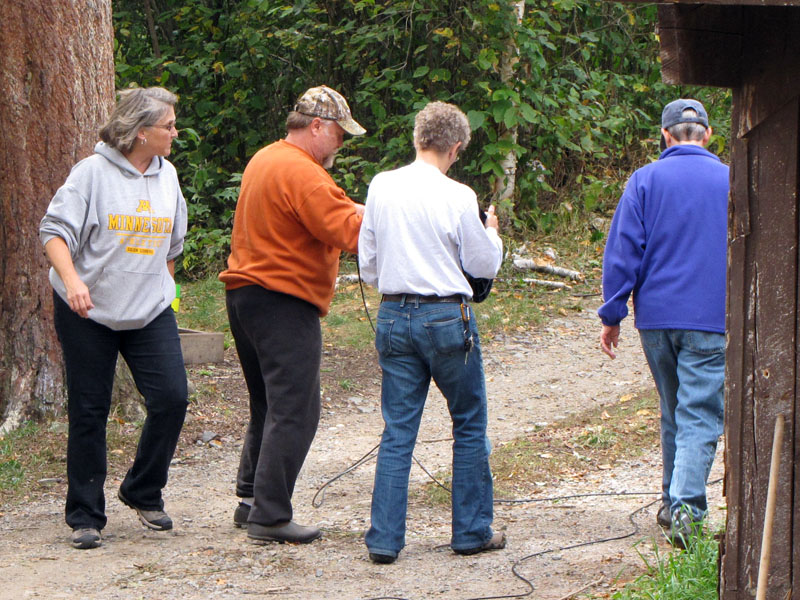 The Spooling Dance 'Hey for 4'Along that line, we are hearing from teachers who used the Den Cams in their classrooms and follow the research bears through the updates. The stories are gratifying and encouraging. Powerful.
Thank you for all you do, and a special thank you to the teachers who are making such a difference.
—Lynn Rogers and Sue Mansfield, Biologists, Wildlife Research Institute and North American Bear Center