
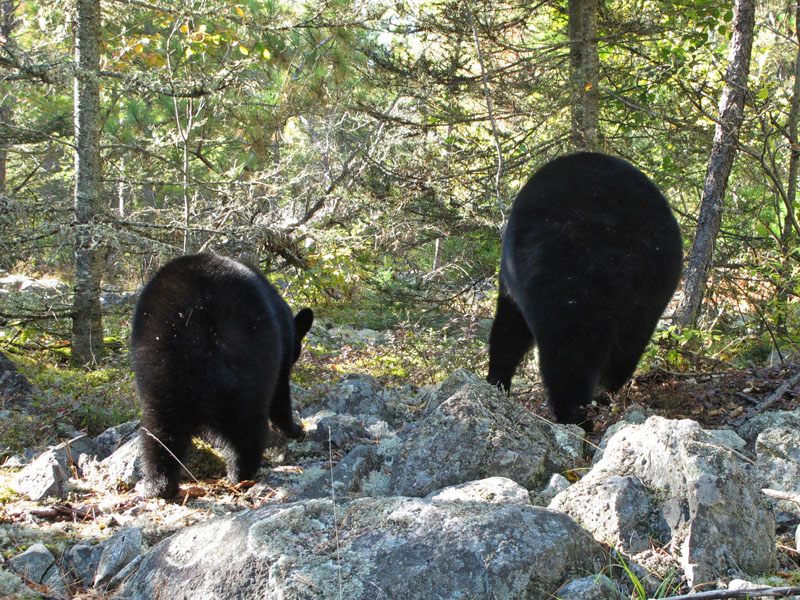
 As we come to grips with the loss of Hope, we are mainly thankful for her life. She brought people together to learn about black bears. She was part of the biggest worldwide bear education project we know. She has changed the attitudes of thousands, perhaps millions, through the internet and documentaries. Her death is a tragedy. There is so much more we all could have learned. Her death is a blow to science, education, the region, and us, including all of you. But it is not the end. It is a hurdle. We’ll all continue to do the best we can with what is left.
We are still waiting for the DNR and the hunter to tell us what happened. We left a message on the hunter’s phone and a message with the DNR. From the DNR we want to know about any bear registered from that bait. We promised them that we would not give out the hunter’s name. Although the DNR has not responded to us yet, we have received information that they intend to provide us with the registration information we are seeking but will not name the hunter. It sounds like a bear was registered as we thought.
We wish none of this would have happened—for Hope, for the study, for the grief it has caused, and for our relationship with this hunter. We thank the DNR for their intention to provide the registration information.
We see your grief on the wall. We are reading your emails of support and condolence. We feel we are not alone. On the wall, we need to recognize that reporters and the DNR are watching and gathering quotes and we all need to take the high road.
Somehow a local taxidermist has been erroneously targeted by some as the hunter who killed Hope. He is not. He doesn’t hunt this area and is not even hunting bear this year. Please, let’s put a stop to that rumor.
The last couple days were media interviews one after another by telephone or on camera. Here is a link to a story for the Los Angeles Times http://latimesblogs.latimes.com/nationnow/2011/09/minnesotas-hope-the-bear-likely-killed.html and a link to the Washington Post http://www.washingtonpost.com/national/researchers-fear-hope-the-black-bear-made-famous-for-birth-on-internet-fell-victim-to-hunter/2011/09/26/gIQAFKCXzK_story.html in addition to stories coming out in the Minneapolis Star Tribune, the Duluth News Tribune, Fox 21 News, WDIO-TV, City Pages, and more.
 For the record, although we do not want research bears killed, we do support hunting as a way to limit bears to the number people will accept as we try to expand acceptance through education. We remember the old days when there was a bounty on black bears in Minnesota. People were paid to trap, poison, or otherwise kill black bears. After the bounty was repealed in 1965, Minnesota bears were considered varmints—animals that could be killed by any method in any number at any time. Bear numbers were low. A varmint mentality toward bears meant people wanted to keep the numbers low. People did not respect bears. Bears were vilified in magazines and taxidermy.
A hunting leader named Dick Anderson, president of the Minnesota State Archery Association thought bears deserved better. He and his organization began working with legislators to elevate bears to big game status. The idea was to limit killing to a number that would allow the bear population to slowly increase. Dick and Lynn joined forces. The law passed in 1971.
The DNR asked Lynn to write the initial bear hunting regulations. Lynn made the hunt as humane as possible. Bear hunting was reduced from 52 weeks to 6. There would be no spring season that orphans cubs that are totally dependent on their mothers. Rifles would not include .22’s that are more likely to wound bears than kill them. Lynn rightly viewed wounding loss as the biggest problem in bear hunting. To reduce that problem, he introduced the controversial practice of baiting. With baiting, a bear would offer a humane, killing shot. Granted, baiting can hardly be considered sporting, but a well placed shot means a quick kill with minimal suffering.
The number of bears killed can be controlled by season length and number of hunting licenses. The way the bears are killed should be the most humane possible. Wounding loss increases when “sport” is introduced in bear hunting, like stalking bears and taking fleeting shots at bears running away or using inadequate weapons. Wounding loss increases the number of bears killed. When a hunter wounds a bear, the hunter continues hunting until he shoots a bear dead and tags it. Meanwhile, how many of the wounded bears die in addition to the recorded kill? With baiting, a bear approaches a bait in an open area and the camouflaged hunter in his tree stand can quietly wait for a killing shot. Killing shots reduce the number of bears killed.
Even with regulated hunting seasons, landowners can kill bears on their own property. People will not coexist with animals they fear.
Ever since we were involved in the hunting legislation back in 1970, both Dick Anderson and Lynn Rogers have worked to educate the public about bears. The result is that people are more tolerant of bears. Landowners kill fewer. People are more willing to coexist. The bear population has tripled and perhaps even quadrupled.
Nevertheless, there are problems. Killing radio-collared bears. Killing mothers with cubs (we have been getting calls daily about orphaned cubs). But overall, things are much better for bears now. You hear much less of landowners gut-shooting bears anymore, and that was a common practice back in the 60’s and 70’s. All we can do is keep working to show people what black bears are really like. The more people know about these basically timid animals, the more willing they become to coexist with them and let bear numbers climb.
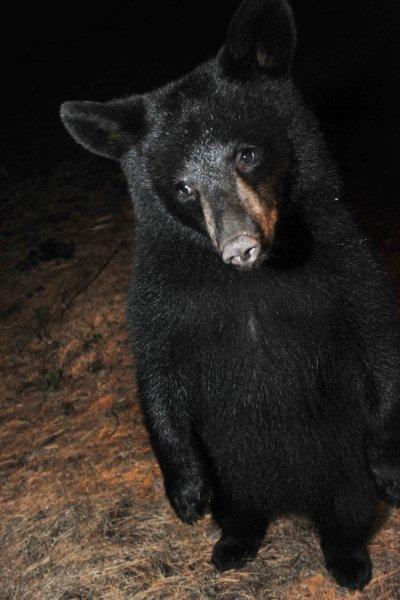 It was good to see your many comments on Lily’s page today as reporters and officials followed the thread. We got a nice email from a reporter saying, “The emotional level of this story is high. Your moderators are doing well to keep comments civil.”
At the North American Bear Center, we are making room to expand the Lily exhibit.
Braveheart’s cub reminded us of a memory of Hope. Fans often commented that Hope was ‘growing into her ears.’ Well said. We measured big Ted’s ear length the other day—5 ¼ inches. We measured Braveheart’s female cub’s ear and it was already 5 inches. Interesting.
June’s radio-signal was so faint today we believe she’s in the rock den we found her near a couple days ago.
Thank you for all you do.
—Lynn Rogers and Sue Mansfield, Biologists, Wildlife Research Institute and North American Bear Center