
 With bears settled into their dens, it was another day of den cam discussion, paperwork, and occasional interactions with the birds.
One thing that makes interacting with birds here interesting is the overlap of northern and southern bird species in this transition forest. The birds from the north are naturally tamer. Some people would say dumber. We think of that differently. Non-migratory birds that live in the north face different problems than birds with more southern ranges, and they have different ways of looking at the world. Getting through winters with marginal food and few predators makes birds of the north think about food. For birds of the south, the opposite is true, surviving year-round in the face of a much greater variety of winged and four-legged predators makes them naturally more wary. We see the comparison right here in northeastern Minnesota. Birds of the north (i.e., Canada) are more likely to assess the prospects of a meal, while birds of the south don’t think twice about food when they sense danger.
For example, the Gray Jay (a northern bird) will assess danger and food and take a chance. They readily learn to eat from a person’s hand. We’ve never had a Blue Jay (a southern bird) even think about it. They don’t come close.
Another example, Red-breasted Nuthatches readily come to a hand. White-breasted Nuthatches (more southern) don’t come close. Pine Siskins are far tamer than Goldfinches, which are in the same genus. Many other birds here offer similar comparisons.
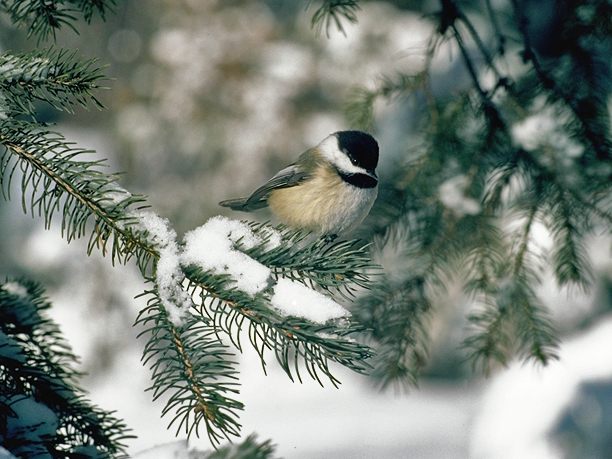
We wonder how the Black-capped Chickadees that are so tame here compare with the tameness (or lack of tameness) of other species of chickadees, like the Carolina Chickadee of the south or the Mountain Chickadee of the west.
Back to bears, in a way. A bad thing happened. All the bear stories you sent in this past spring have been lost. We had a company temporarily help with some web mail reconfiguring, and the story file ended up deleted and irretrievable. We hope all is not lost. Can you sent your stories in again? Janice Edens has agreed to edit them and turn them into a book—Bear Tales. You turned in over a hundred great stories. To send them in again, send them to
Changes are happening to both bear.org and bearstudy.org websites in preparation for the increase in traffic the den cams will undoubtedly generate. The first major change is the ‘Daily Update’ will now appear on the front page of bear.org. However, when you click to expand the update, you will be taken to bearstudy.org to read the full update. This may be a bit jarring right now, but soon both websites will undergo facelifts so the transition between the two sites will be easier.
Thank you for all you do.
—Lynn Rogers and Sue Mansfield, Biologists, Wildlife Research Institute and North American Bear Center