
Settling in
October 27, 2010 – 7:33 PM CDT
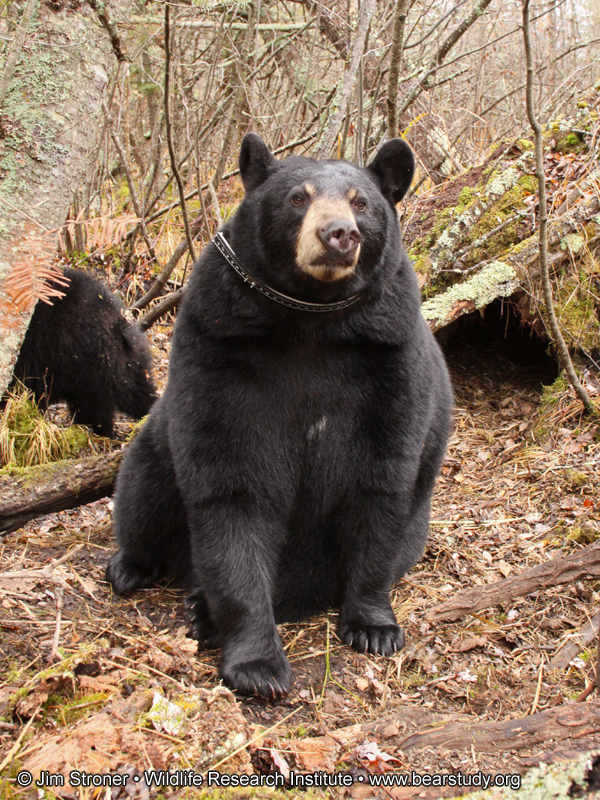 We didn’t check, but we suspect the research bears were either raking in extra bedding or resting in their dens today. Between rain and increasing wind, winter preparations are in order. Somehow, the snow and very high winds went to the south of us. However, the north shore of Lake Superior got up to 5 inches of snow.
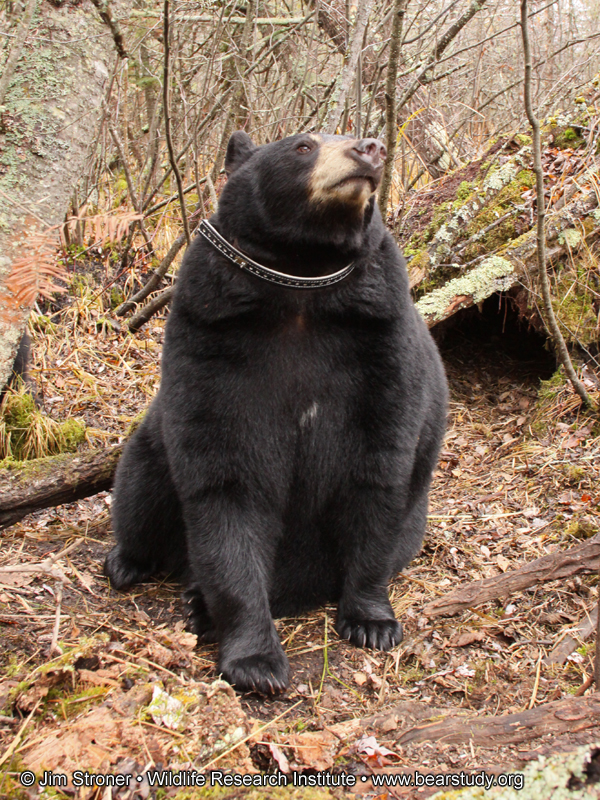
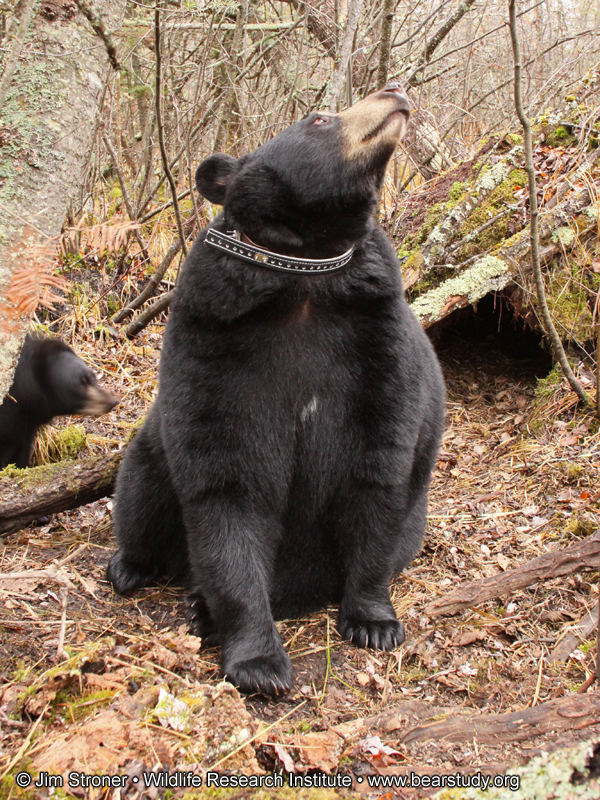
We don’t want to bother bears that are slowing down and settling in, so we’re settling in too. The weather is getting bad. We’re entering the office part of the year. And we have lots to catch up on. Data to crunch. Things to write. Etc. A priority is getting Lily’s den cam in place by early December. We talked to the landowner who is a former principal of Ely High School today. Tonight, he will present our request to the other 3 landowners who jointly own the property where Lily is denning (pictures of Lily showing off her new collar were taken Oct 25, 2010).
The highlight of the day was stopping in the Bear Center hungry and finding brand new sandwich material, a fruit tray, cookies and cupcakes, and some treats left over from earlier. Great!
We are seeing your wonderful letters and are very much on edge as to how the DNR will respond. Will they rule in favor of hunters being able to shoot any bear, ribboned and collared or not, because hunter dollars pay for bear management? Or will they recognize the values of research and education and the money you bring to Minnesota? Will they pay attention only to Minnesota residents? Or will they consider the value of all of you who visit the state and spend money? Will they recognize the values of our research and their own research and how it benefits management through educating the public? Or will they consider research that does not help determine how many bears should be killed as not being worthy of protecting. Will they inconvenience a few hunters by making it illegal to shoot radio-collared, ribboned bears, which means asking hunters to look twice for collars? Or will they leave it legal to shoot any bear so hunters can take quick shots at poorly identified targets that risk wounding bears and shooting people?
 One comment we have seen from DNR officials is that we haven’t published much in peer-reviewed journals in recent years. We plan to do that. But it has not been a high priority, and here’s why. We have already senior-authored more peer-reviewed papers than anyone. According to a survey by the Journal of Wildlife Management, the average journal article is thoroughly read by 6 people. More people read the abstracts. We feel the papers we have published have done little to help bears. Sure, they contain facts and figures and expand the knowledge of bear biology, but they do little to change people’s attitudes about bears, and it is people’s attitudes that make the most difference for bears.
So, in the last decade, we’ve focused on reaching the public. Since 2001, we have reached about 100 million people a year through TV documentaries while tackling some of the most difficult questions in bear biology. While reaching people and changing attitudes, we were quietly gathering the most detailed data on bear behavior and ecology ever obtained anywhere. Now, with 5 documentaries filmed (2 have aired, 3 will air in 2011) and the North American Bear Center created, we are preparing to shift gears.
 We see great value in the Educational Outreach Program you and we are developing. We see great value in adding exhibits to the North American Bear Center. We see great value in writing the book “Daring to Trust: my life of bear research” about how we developed ever kinder and gentler research methods to gain ever deeper insights into bear behavior and ecology. And the time has come to crunch some data and write some peer-reviewed papers. Getting some of those published will be a challenge because most of the scientific reviewers will be mired in misconceptions we will have to overcome.
Very few biologists have spent any time with non-tranquilized wild bears. How can a person learn about bear ecology and behavior without seeing the study animals? That’s the questions we asked long ago. It’s one of the reasons we developed research methods that facilitate observation. It’s controversial, and that is a constant problem for us. But direct observation is the only way to learn much of what needs to be learned if people are to understand and appreciate bears. It’s the only way to obtain data that can change attitudes, and good human attitudes are the key to survival of bear populations.
People will not coexist with animals they fear. We believe good public attitudes are a key to good bear management. Consequently, we don’t understand why DNR officials say it is not a priority to protect our radio-collared bears because our data contributes little to bear management. The bear-human interface is one of the most important aspects of bear management, and that is a primary aspect of our research.
Thank you for all you do.
—Lynn Rogers and Sue Mansfield, Biologists, Wildlife Research Institute and North American Bear Center